✠

Saints of the Day

Traditional Roman Calendar (1962 Missal)

This site follows the traditional Roman calendar of 1962, as found in the 1962 Roman Missal used at the Traditional Latin Mass. Some feast days fall on different dates than in the General Roman Calendar of 1969, revised after the Second Vatican Council.

Category: Saint of the Day

  • November 15 – St. Albert the Great, Bishop, Confessor and Doctor

    November 15 – St. Albert the Great, Bishop, Confessor and Doctor

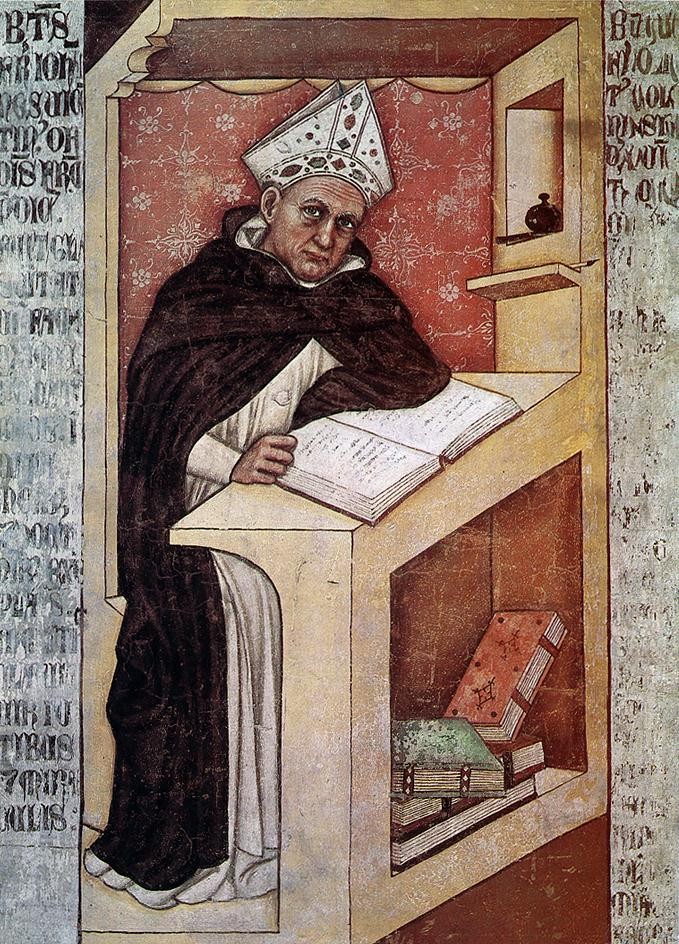
    Image: Tommaso da Modena, Albertus Magnus, fresco, 1352, Chapter House of San Niccolò, Treviso. Public domain, via Wikimedia Commons. (source)

    Martyrology · Liturgical colour: Green

    Símile est regnum cælórum grano sinápis, quod accípiens homo sevit in agro suo.
    The kingdom of heaven is like to a grain of mustard seed, which a man took and sowed in his field.

    Matthew 13:31

    About Today

    November 15 in the 1962 calendar is a Sunday, the Twenty-fifth Sunday after Pentecost, which takes precedence over the feast of St. Albert the Great. The Sunday has no saint of its own, so today we turn to the saint the Roman Martyrology names for November 15: St. Albert the Great.

    His Life

    Albert was born around 1200 in Swabia, in Germany, and studied at Padua, where he heard the call to join the Order of Preachers. He became a great teacher at Paris and Cologne, and among his pupils was the young St. Thomas Aquinas.

    Albert studied the natural world with wonder, writing on plants, animals, and the heavens, and he believed all truth leads back to God. He served for a time as Bishop of Regensburg, then returned to teaching and to making peace among quarrelling parties. He died in Cologne in 1280 and was declared a Doctor of the Church in 1931.

    A Lesson for Today

    Like the mustard seed in today’s Gospel, a small beginning can grow into something great when God gives the increase. Albert shows us that study and prayer belong together, and that patient effort offered to God bears fruit.


    Sancte Alberte, ora pro nobis.
    St. Albert, pray for us.

  • November 14 – St. Josaphat, Bishop and Martyr

    November 14 – St. Josaphat, Bishop and Martyr

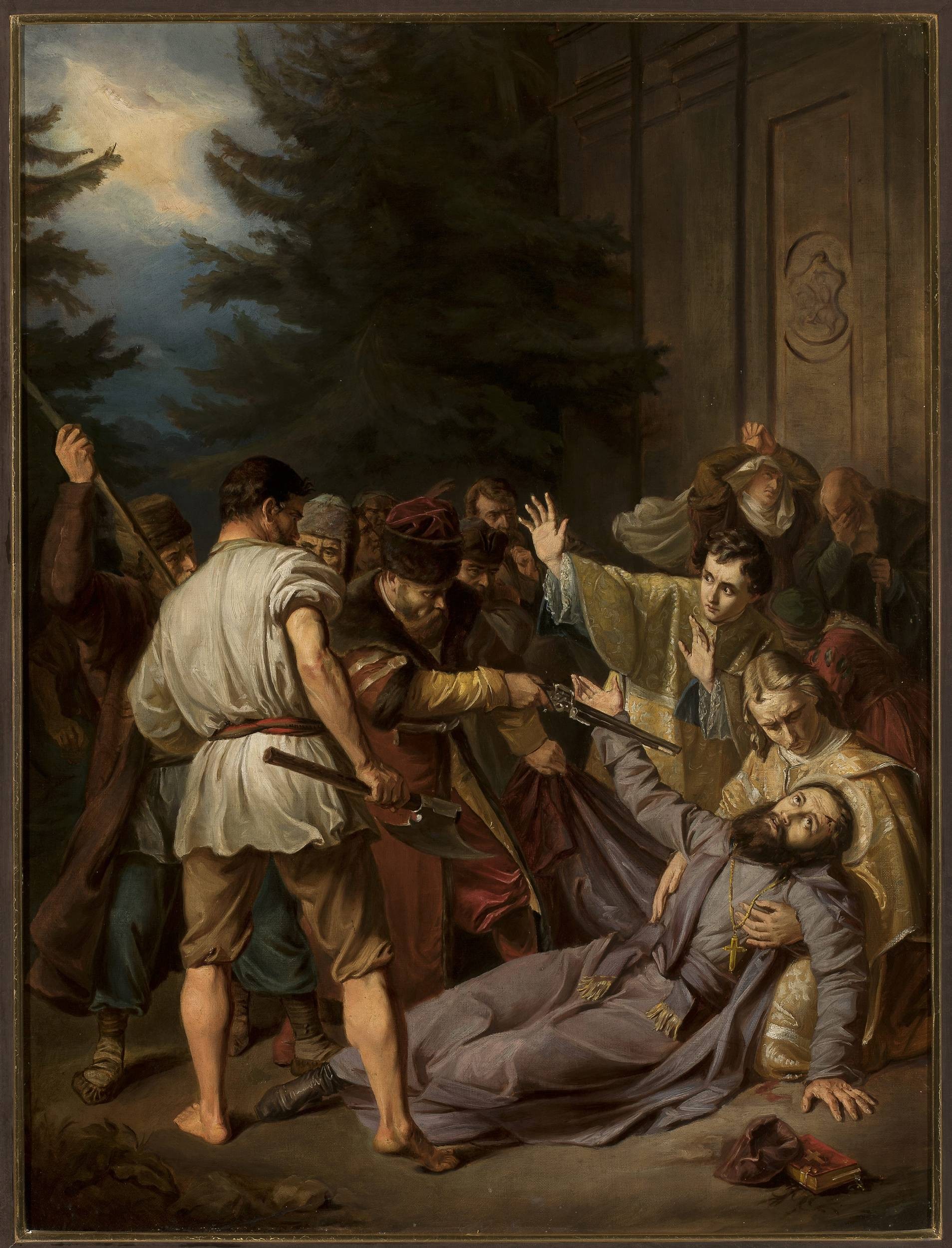
    Image: Józef Simmler, Martyrdom of St. Josaphat Kuntsevych, c. 1861. Public domain, via Wikimedia Commons. (source)

    III Class · Liturgical colour: Red

    Ego sum pastor bonus. Bonus pastor ánimam suam dat pro óvibus suis.
    I am the good shepherd. The good shepherd giveth his life for his sheep.

    John 10:11

    About Today

    On November 14 the 1962 calendar keeps the feast of St. Josaphat, Bishop and Martyr, a feast of the third class, with red vestments for a martyr.

    His Life

    Josaphat Kuntsevych was born around 1580 in Volhynia, in the lands of the old Polish-Lithuanian Commonwealth. As a young man he worked as a merchant’s apprentice, but he gave his heart to prayer and entered a monastery in Vilnius, where he lived a strict life of fasting and devotion.

    He became Archbishop of Polotsk and gave himself to the work of unity, helping Eastern Christians of his people remain in communion with the Successor of St. Peter. He visited his people, repaired churches, taught the faith, and cared for the poor, all with great patience.

    Not everyone welcomed this work. In 1623, while visiting Vitebsk, he was attacked by an angry crowd and killed. He was the first saint of the Eastern Catholic Churches to be formally canonized, in 1867.

    A Lesson for Today

    Josaphat loved the flock entrusted to him more than his own life. We pray for the unity of all Christians, and we can begin by living gently and truthfully with those around us.

    Collect

    Latin

    Excita, quǽsumus, Dómine, in Ecclésia tua Spíritum, quo replétus beátus Jósaphat Martyr et Póntifex tuus ánimam suam pro óvibus pósuit: ut, eo intercedénte, nos quoque eódem Spíritu moti ac roboráti, ánimam nostram pro frátribus pónere non vereámur. Per Dóminum nostrum Iesum Christum, Fílium tuum, qui tecum vivit et regnat in unitáte Spíritus Sancti, Deus, per ómnia sǽcula sæculórum. Amen.

    English

    Arouse in Thy Church, O Lord, the spirit with which blessed Josaphat, Thy Martyr and Bishop, was filled when he laid down his life for his flock; so that, by his intercession, we also, moved and strengthened by the same spirit, may not fear to lay down our lives for our brethren. Through our Lord Jesus Christ, Thy Son, who liveth and reigneth with Thee in the unity of the Holy Ghost, God, world without end. Amen.


    Sancte Jósaphat, ora pro nobis.
    St. Josaphat, pray for us.

  • November 13 – St. Didacus, Confessor

    November 13 – St. Didacus, Confessor

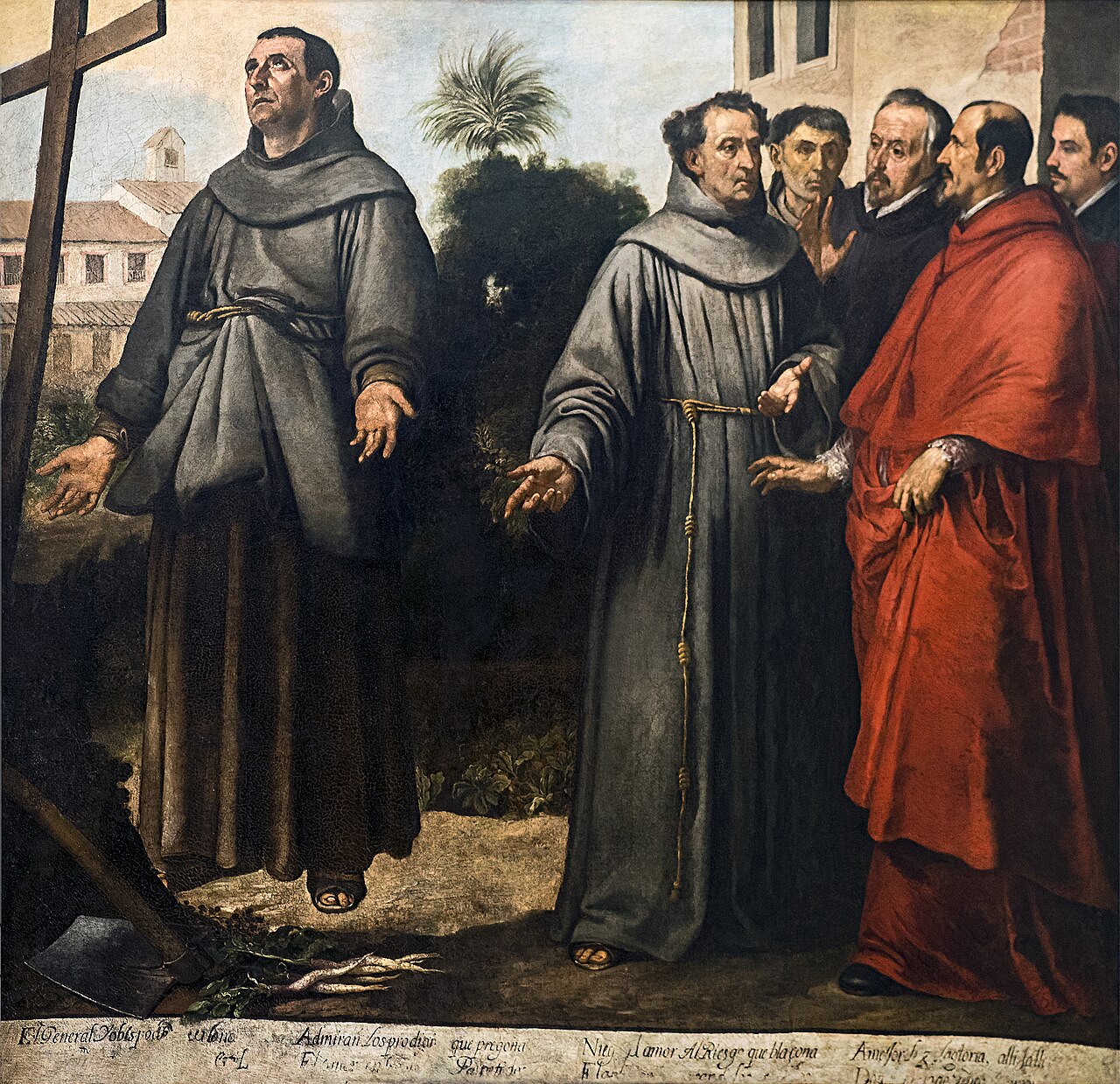
    Image: Bartolomé Esteban Murillo, San Diego de Alcalá in ecstasy before the Cross, 17th century. Musée des Augustins, Toulouse. Public domain, via Wikimedia Commons.

    III Class · Liturgical colour: White

    Abscondísti hæc a sapiéntibus et prudéntibus, et revelásti ea párvulis.
    Thou hast hid these things from the wise and prudent, and hast revealed them to little ones.

    Matthew 11:25

    About Today

    On November 13 the 1962 calendar keeps the feast of St. Didacus, Confessor, a commemoration of the third class, with white vestments. In English he is also called Diego of Alcalá.

    His Life

    Didacus was born in Spain in the early 1400s, in the village of San Nicolás del Puerto. As a young man he lived as a hermit, praying alone and learning to trust God in simple things. Later he entered the Franciscan Order as a lay brother, never a priest, and gladly took the lowliest work.

    He was sent to the Canary Islands, where he served as superior, and later to Rome, where he cared for the sick during the Jubilee year of 1450. Wherever he went he was gentle with the poor, giving them bread from the friary kitchen and tending the ill with his own hands.

    He was not a learned man, yet he understood what matters most. He loved the Cross above all things, and his companions saw him often lost in prayer before it. He died at Alcalá in Spain on November 12, 1463, kissing the crucifix and saying words of praise to God.

    A Lesson for Today

    Didacus held no high office and wrote no great books, but he gave his days to prayer and to the poor. God often does His great work through humble people, and each of us can begin with small, faithful acts of kindness.

    Collect

    Latin

    Omnípotens sempitérne Deus, qui dispositióne mirábili infírma mundi éligis, ut fórtia quæque confúndas: concéde propítius humilitáti nostræ; ut, piis beáti Dídaci Confessóris tui précibus, ad perénnem in cœlis glóriam sublimári mereámur. Per Dóminum nostrum Iesum Christum, Fílium tuum, qui tecum vivit et regnat in unitáte Spíritus Sancti, Deus, per ómnia sǽcula sæculórum. Amen.

    English

    Almighty, eternal God, who in Thy wondrous providence dost choose the weak things of the world to overcome the strong, mercifully grant to us Thy humble servants that, by the loving prayers of blessed Didacus, Thy Confessor, we may be found worthy to be raised to everlasting glory in heaven. Through our Lord Jesus Christ, Thy Son, who liveth and reigneth with Thee in the unity of the Holy Ghost, God, world without end. Amen.


    Sancte Dídace, ora pro nobis.
    St. Didacus, pray for us.

  • November 12 – St. Martin I, Pope and Martyr

    November 12 – St. Martin I, Pope and Martyr

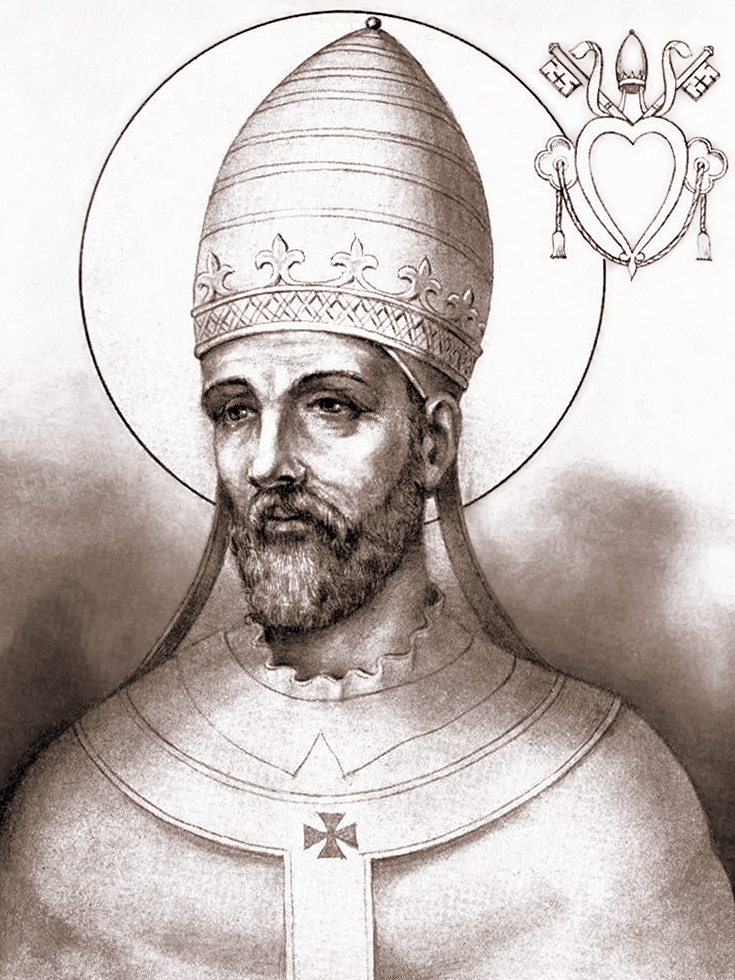
    Image: Portrait of Pope Martin I, from Artaud de Montor, The Lives and Times of the Popes, 1842. Public domain, via Wikimedia Commons. (source)

    III Class · Liturgical colour: Red

    Tu es Petrus, et super hanc petram ædificabo Ecclesiam meam.
    Thou art Peter, and upon this rock I will build My Church.

    Matthew 16:18

    About Today

    On November 12 the 1962 calendar keeps the feast of St. Martin I, Pope and Martyr. The Mass is Si diligis me, from the Common of Supreme Pontiffs.

    His Life

    Martin was born at Todi in Umbria and served the Church in Rome before he was chosen Pope in 649. At that time many in the East taught that Christ had only one will, a divine one, and the Emperor Constans II had forbidden anyone even to discuss the question.

    Soon after his election Martin gathered the bishops of the West at the Lateran. The synod taught clearly that Christ, true God and true man, has both a divine and a human will, and it condemned the error along with the imperial decree that tried to silence the truth.

    The emperor’s anger followed. In 653 soldiers seized the Pope in Rome, though he was ill, and carried him to Constantinople. There he was kept in prison, mocked in public, stripped of his vestments and condemned. His life was spared only to send him into exile at Cherson in the Crimea.

    In that distant place he suffered hunger and cold and felt forgotten by many at home, yet his letters show no bitterness, only trust in God and prayer for the Church. He died there in 655, and he is honoured as a martyr because his sufferings were borne for the Faith.

    A Lesson for Today

    Martin could have kept his comfort by staying silent. He chose instead to speak the truth about Christ and to pay the price. When it costs us something to be faithful, we may ask him to share his courage with us.

    Collect

    Latin

    Gregem tuum, Pastor ætérne, placátus inténde: et per beátum Martínum Mártyrem tuum atque Summum Pontíficem, perpétua protectióne custódi; quem totíus Ecclésiæ præstitísti esse pastórem. Per Dóminum nostrum Iesum Christum, Fílium tuum, qui tecum vivit et regnat in unitáte Spíritus Sancti, Deus, per ómnia sǽcula sæculórum. Amen.

    English

    O eternal Shepherd, look graciously upon Thy flock, and keep it under Thy continual protection, through blessed Martin, Thy Martyr and Sovereign Pontiff, whom Thou didst set as shepherd over the whole Church. Through our Lord Jesus Christ, Thy Son, who liveth and reigneth with Thee in the unity of the Holy Ghost, God, world without end. Amen.


    Sancte Martine, ora pro nobis.
    St. Martin, pray for us.

  • November 11 – St. Martin of Tours, Bishop and Confessor

    November 11 – St. Martin of Tours, Bishop and Confessor

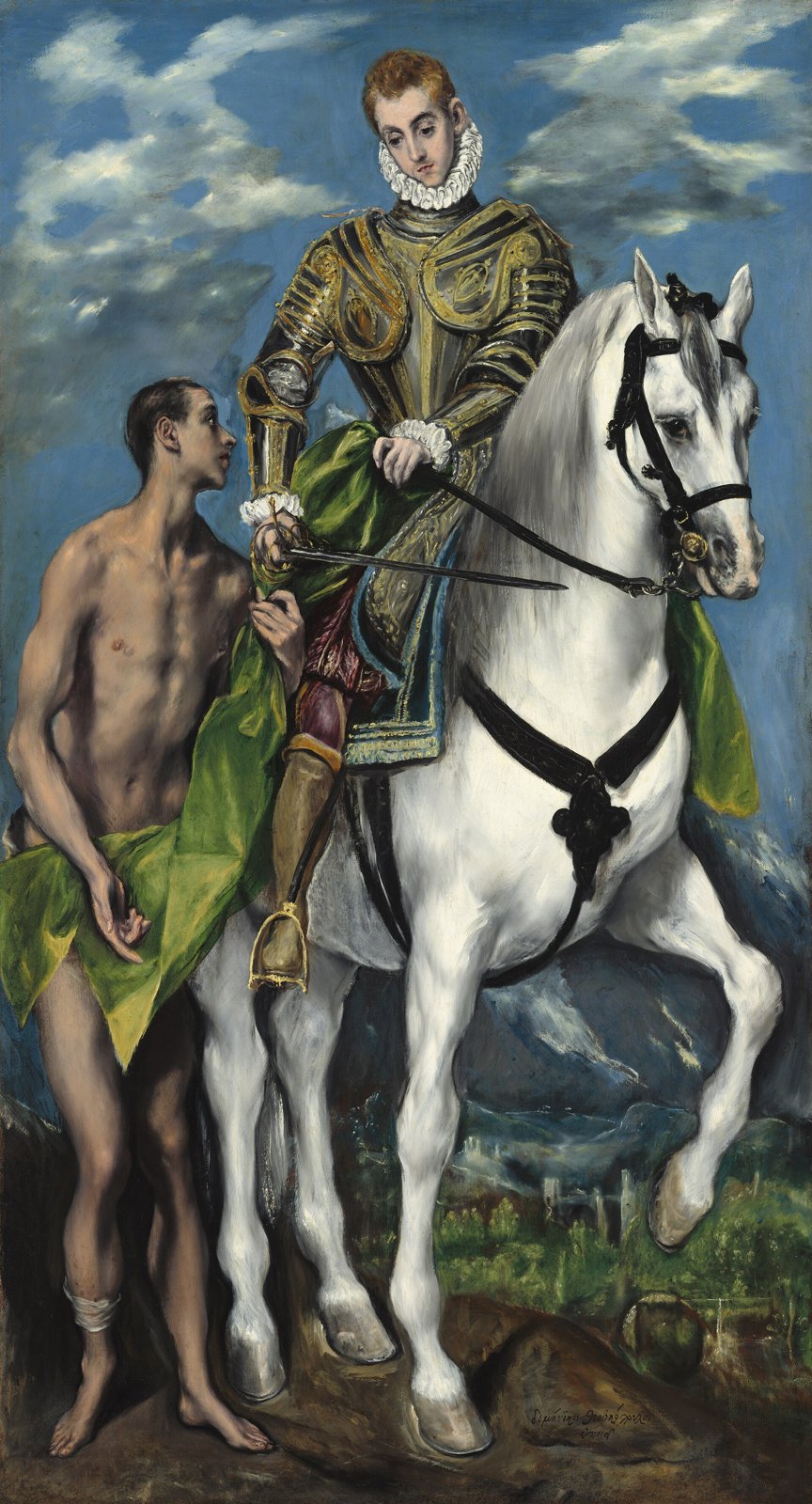
    Image: El Greco, Saint Martin and the Beggar, 1597-1599. National Gallery of Art. Public domain, via Wikimedia Commons. (source)

    III Class (Commemoration of St. Mennas, Martyr) · Liturgical colour: White

    This site follows the traditional Roman calendar of 1962, as found in the 1962 Roman Missal used at the Traditional Latin Mass. Some feast days fall on different dates than in the General Roman Calendar of 1969, revised after the Second Vatican Council.

    Martinus adhuc catechumenus hac me veste contexit.
    Martin, still a catechumen, clothed Me with this garment.

    Sulpicius Severus, Life of St. Martin

    About Today

    On November 11 the 1962 calendar keeps St. Martin of Tours, Bishop and Confessor, with a commemoration of the holy martyr St. Mennas.

    His Life

    Martin was a Roman soldier who had not yet been baptized. One winter day at the gates of Amiens he met a beggar shivering with cold, and he drew his sword and cut his cloak in two to share it with him.

    That night Martin saw Christ wearing the half of the cloak and telling the angels that Martin had clothed Him. He was baptized soon afterward, left the army, and later became Bishop of Tours, where he was loved for his charity and for bringing the Faith to the countryside of Gaul.

    A Lesson for Today

    Christ tells us that what we do for the least of His brethren we do for Him. Martin gave only half a cloak, but he gave it at once.


    Sancte Martine, ora pro nobis.
    St. Martin, pray for us.

  • November 10 – St. Andrew Avellino, Confessor

    November 10 – St. Andrew Avellino, Confessor

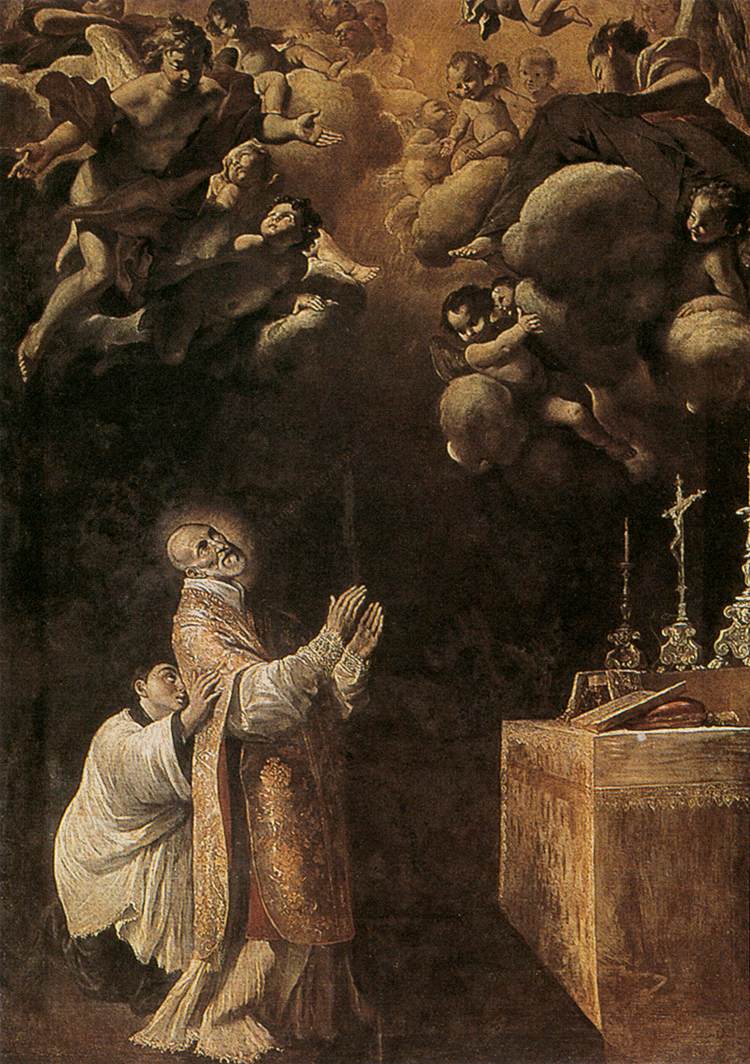
    Image: Giovanni Lanfranco, St Andrea Avellino, 1624. Public domain, via Wikimedia Commons. (source)

    III Class (Commemoration of Sts. Tryphon, Respicius and Nympha, Martyrs) · Liturgical colour: White

    This site follows the traditional Roman calendar of 1962, as found in the 1962 Roman Missal used at the Traditional Latin Mass. Some feast days fall on different dates than in the General Roman Calendar of 1969, revised after the Second Vatican Council.

    Introibo ad altare Dei.
    I will go in to the altar of God.

    Psalm 42:4

    About Today

    On November 10 the 1962 calendar keeps St. Andrew Avellino, Confessor, with a commemoration of the holy martyrs Tryphon, Respicius and Nympha.

    His Life

    Andrew was a priest of the Theatine order who labored for the reform of clergy and people in Naples, and he was known for his penance and devotion at the altar of God.

    On November 10, 1608, as he began Holy Mass with the words “Introibo ad altare Dei,” he was struck down by a stroke at the foot of the altar. He died shortly after, and the faithful have since invoked him for a happy death and against sudden death.

    A Lesson for Today

    Andrew went to his death at the very place he most loved, the altar. His end reminds us to live each day prepared to meet the Lord.


    Sancte Andrea, ora pro nobis.
    St. Andrew, pray for us.

  • November 9 – St. Theodore of Amasea, Martyr

    November 9 – St. Theodore of Amasea, Martyr

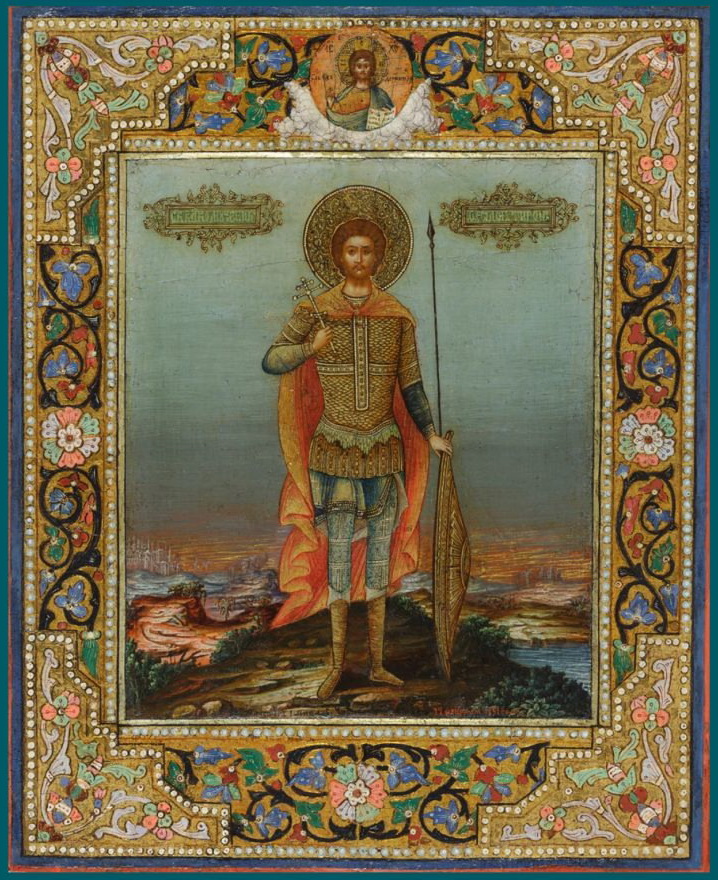
    Image: Osip Semenovich Chirikov, icon of St. Theodore Tyron, 1891. Abramov’s icon museum. Public domain, via Wikimedia Commons. (source)

    II Class (Dedication of the Lateran Basilica; Commemoration of St. Theodore) · Liturgical colour: White

    This site follows the traditional Roman calendar of 1962, as found in the 1962 Roman Missal used at the Traditional Latin Mass. Some feast days fall on different dates than in the General Roman Calendar of 1969, revised after the Second Vatican Council.

    Esto fidelis usque ad mortem, et dabo tibi coronam vitæ.
    Be thou faithful until death: and I will give thee the crown of life.

    Apocalypse 2:10

    About Today

    On November 9 the 1962 calendar keeps the Dedication of the Archbasilica of the Most Holy Savior, the Lateran, the cathedral of the Pope and mother of all churches. The Mass is that of the Dedication, and the Church also makes a commemoration of St. Theodore, martyr.

    His Life

    Theodore was a young soldier in the Roman army, serving at Amasea in Pontus. When the persecution under the emperors came, around the year 306, he was ordered to offer sacrifice to the pagan gods and refused, confessing Christ openly before the magistrates.

    He was given time to reconsider, but he used it to remain steadfast. He was then burned alive for the faith. The Church has honored him for many centuries as a martyr who kept faith with his true Commander to the end.

    A Lesson for Today

    Theodore shows that fidelity is proved by perseverance. Our Lord’s promise to the faithful unto death is the crown of life, and the saints win it by holding fast, one day at a time, to what they know to be true.


    Sancte Theodore, ora pro nobis.
    St. Theodore, pray for us.

  • November 8 – The Four Holy Crowned Martyrs

    November 8 – The Four Holy Crowned Martyrs

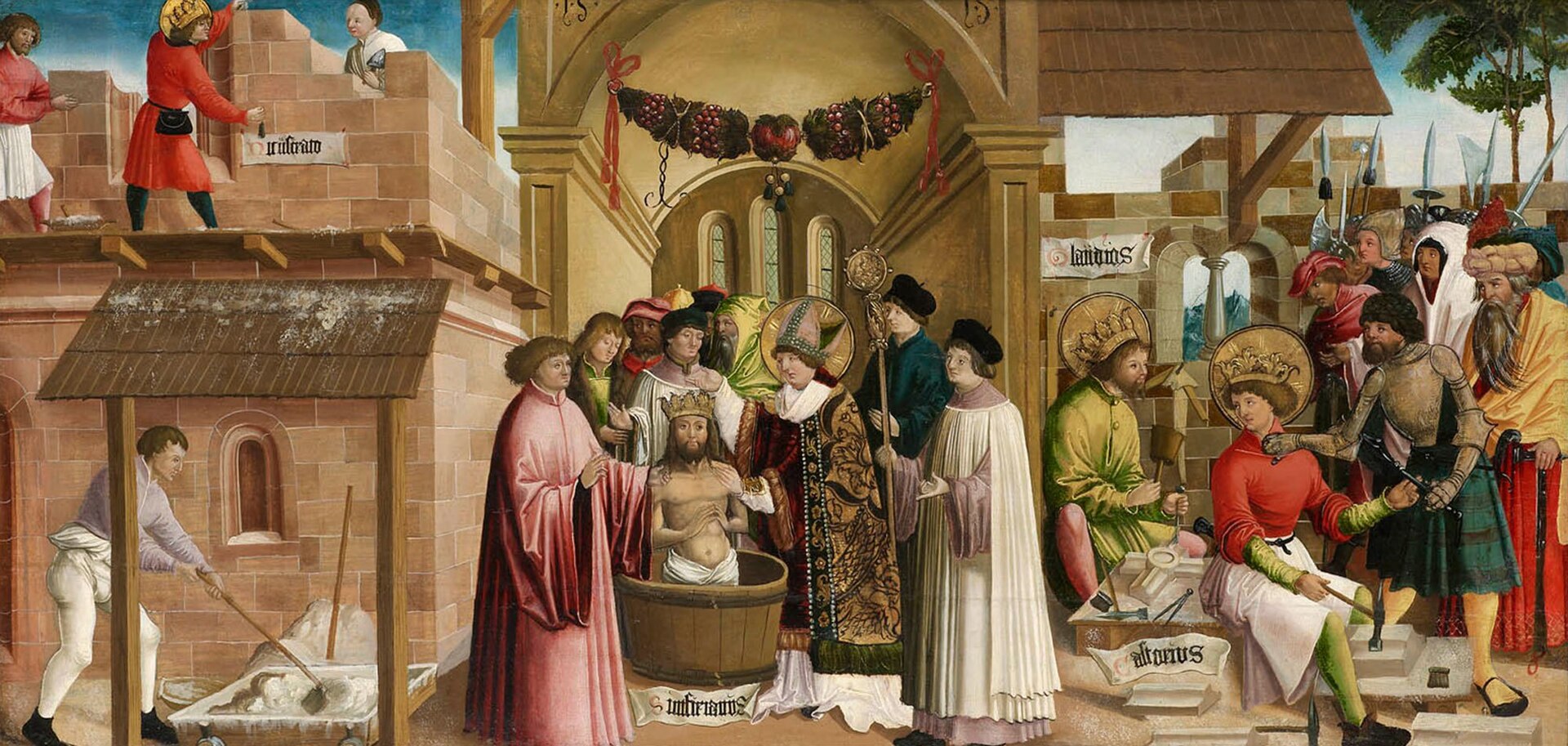
    Image: Rueland Frueauf the Younger, The Legend of the Four Crowned Martyrs, 1515, oil on panel. Public domain, via Wikimedia Commons. (source)

    Sunday (Commemoration) · Liturgical colour: Green

    This site follows the traditional Roman calendar of 1962, as found in the 1962 Roman Missal used at the Traditional Latin Mass. Some feast days fall on different dates than in the General Roman Calendar of 1969, revised after the Second Vatican Council.

    Justorum animae in manu Dei sunt, et non tangent illos tormentum mortis.
    The souls of the just are in the hand of God, and the torment of death shall not touch them.

    Wisdom 3:1

    About Today

    Today is Sunday in the traditional 1962 calendar. Because there are extra Sundays after Pentecost this year, the Mass is that of the resumed Fifth Sunday after Epiphany. The Four Holy Crowned Martyrs have a commemoration in the Missal on November 8; the Sunday outranks it, so they are commemorated at Mass.

    Their Life

    The Church in Rome has honored the Four Holy Crowned Martyrs since the earliest ages of the faith. Their ancient basilica, Santi Quattro Coronati, still stands on the Caelian Hill and has borne their name for many centuries.

    The traditional Roman Martyrology keeps two closely joined memories on this day. It first names five Christians — Claudius, Nicostratus, Symphorian, Castorius, and Simplicius — who, in the persecution of the emperor Diocletian, were cast into prison and severely scourged, and, because they would not abandon the faith of Christ, were thrown into the river. It then names four brothers — Severus, Severianus, Carpophorus, and Victorinus — who under the same emperor were beaten to death with leaded scourges. Their names were not known at first, so the faithful simply called them the Four Crowned Martyrs: four who had won the crown of martyrdom. In time their feast was kept together with the five named above, on the eighth of November.

    A later tradition, long cherished in the Church, remembers them as skilled stonemasons who would not carve a statue of the pagan god Aesculapius. Rather than dishonor Christ by making an image of a false god, they accepted a cruel death.

    A Lesson for Today

    These martyrs teach us that no skill, no order from those in power, and no fear of suffering can excuse us from remaining faithful to Christ. It is better to lose everything in this world than to give to an idol the honor that belongs to God alone.

    Collect

    Latin

    Præsta, quǽsumus, omnípotens Deus: ut, qui gloriósos Mártyres fortes in sua confessióne cognóvimus, pios apud te in nostra intercessióne sentiámus. Per Dóminum nostrum Jesum Christum, Fílium tuum, qui tecum vivit et regnat in unitáte Spíritus Sancti, Deus, per ómnia sǽcula sæculórum. Amen.

    English

    Grant, we beseech Thee, almighty God, that we who have known Thy glorious Martyrs to be strong in their confession, may experience their loving intercession with Thee. Through our Lord Jesus Christ, Thy Son, who liveth and reigneth with Thee in the unity of the Holy Ghost, God, world without end. Amen.


    Sancti Quattuor Coronati, orate pro nobis.
    Ye Four Holy Crowned Martyrs, pray for us.
  • November 7 – St. Willibrord, Bishop

    November 7 – St. Willibrord, Bishop

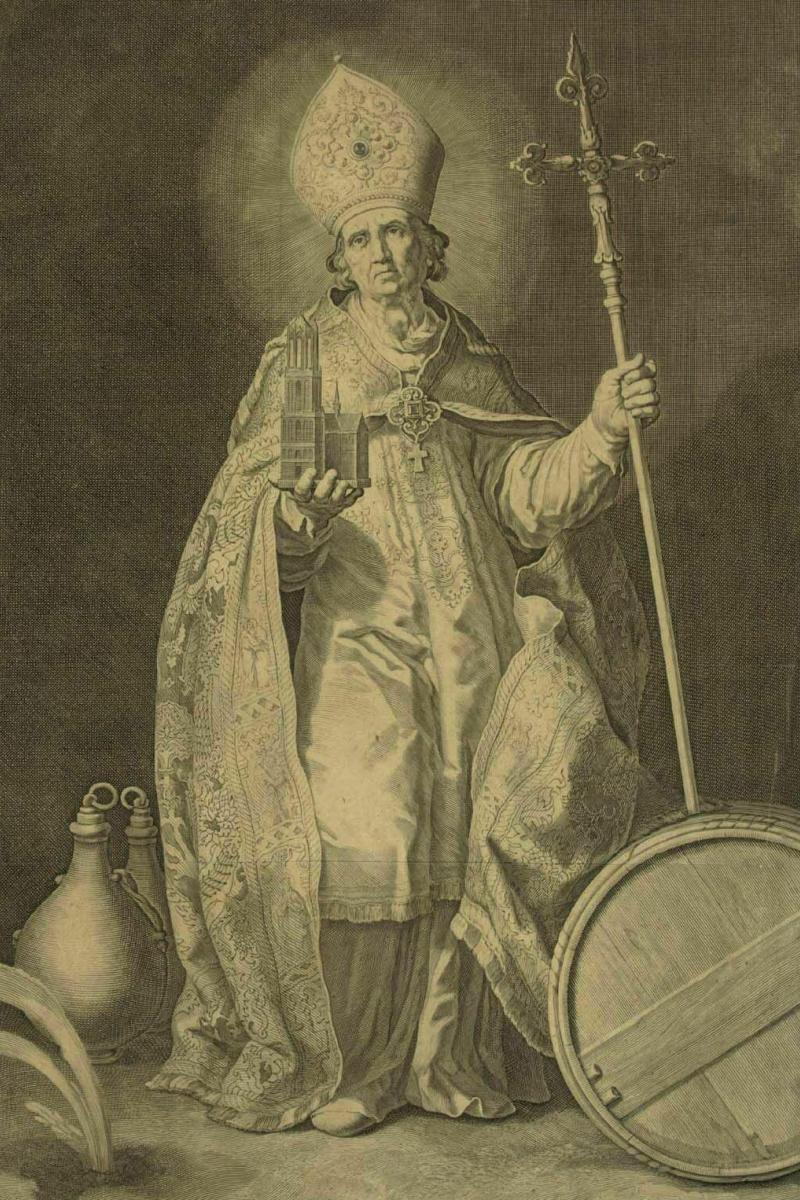
    Image: Engraving by Frederick Bloemaert after Abraham Bloemaert, S. Willibrordus, c. 1630. Public domain, via Wikimedia Commons. (source)

    Saturday of Our Lady (from the Roman Martyrology) · Liturgical colour: White

    This site follows the traditional Roman calendar of 1962, as found in the 1962 Roman Missal used at the Traditional Latin Mass. Some feast days fall on different dates than in the General Roman Calendar of 1969, revised after the Second Vatican Council.

    Euntes in mundum universum prædicate Evangelium omni creaturæ.
    Go ye into the whole world, and preach the gospel to every creature.

    Mark 16:15

    About Today

    Today is the Saturday of Our Lady in the traditional 1962 calendar: a fourth-class Mass of the Blessed Virgin Mary, with no saint’s feast in the Missal. The saint honored here is taken from the traditional Roman Martyrology for November 7.

    His Life

    Willibrord was born about the year 658 in Northumbria and was formed in the monastic life at Ripon under St. Wilfrid. Later he spent years of study and prayer in Ireland, then set out with companions to bring the Faith to the peoples of Friesland.

    In Rome he received the blessing of Pope Sergius I, who consecrated him bishop and gave him the name Clement. From Utrecht he labored for decades among the Frisians, founding churches and monasteries, and he also carried the Gospel into Denmark. Near the end of his life he established the famous abbey of Echternach in what is now Luxembourg, where he died on November 7 in the year 739.

    He is remembered as the Apostle of the Frisians and the first bishop of Utrecht. His feast in the Martyrology keeps alive the memory of a missionary who left his homeland so that others might know Christ.

    A Lesson for Today

    St. Willibrord lived Our Lord’s command to preach the Gospel to every creature. His courage and perseverance invite us to share the Faith with patience wherever God places us.


    Sancte Willibrorde, ora pro nobis.
    St. Willibrord, pray for us.

  • November 6 – St. Leonard of Limoges, Confessor

    November 6 – St. Leonard of Limoges, Confessor

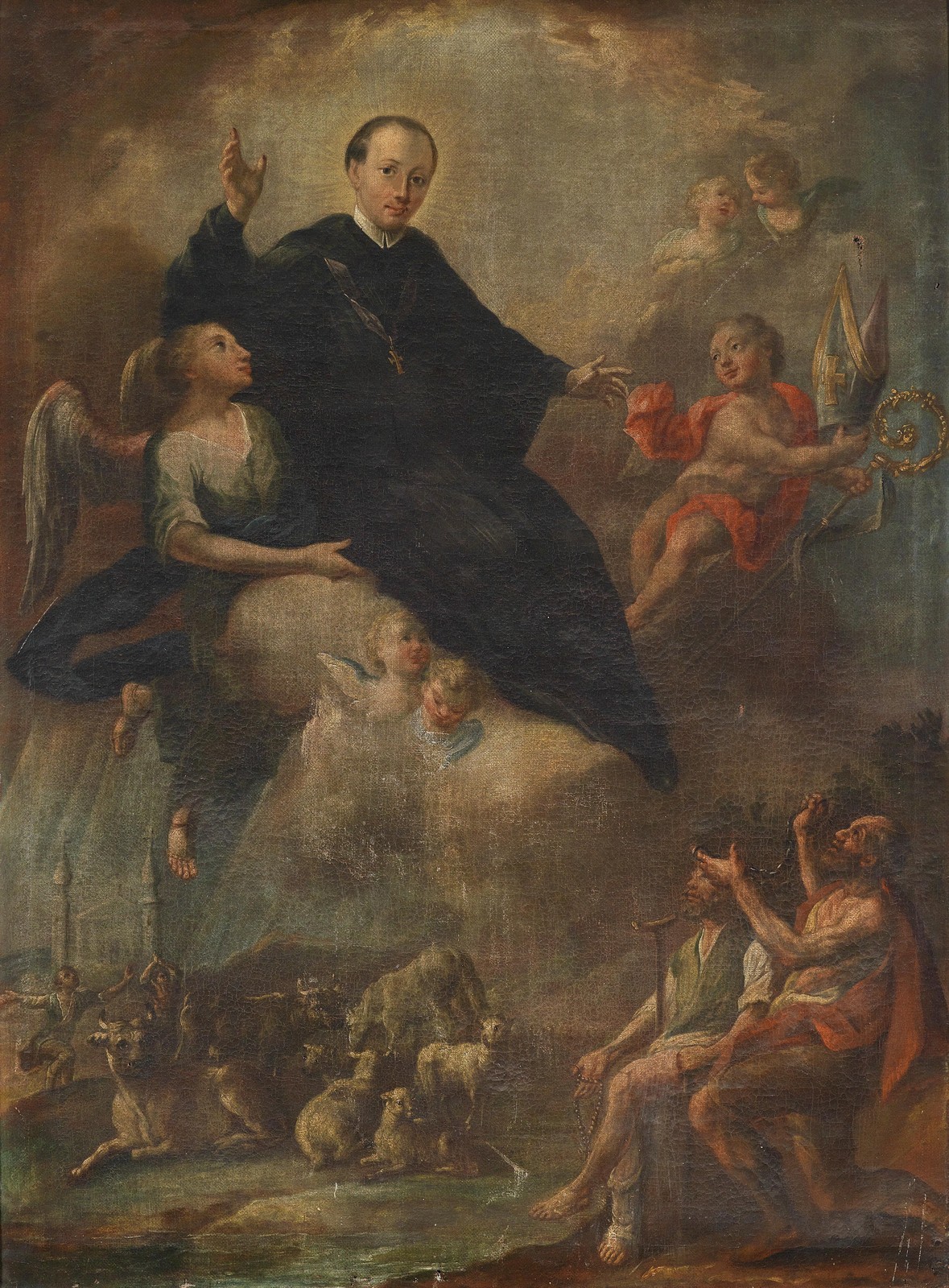
    Image: Austrian School, 18th century, Der heilige Leonhard als Schutzpatron der Gefangenen (oil on canvas). Public domain, via Wikimedia Commons. (source)

    Feria (from the Roman Martyrology) · Liturgical colour: Green

    This site follows the traditional Roman calendar of 1962, as found in the 1962 Roman Missal used at the Traditional Latin Mass. Some feast days fall on different dates than in the General Roman Calendar of 1969, revised after the Second Vatican Council.

    In carcere eram, et venistis ad me.
    I was in prison, and you came to me.

    Matthew 25:36

    About Today

    Today is a feria in the 1962 calendar, with no saint’s feast in the Missal. The saint honored here is taken from the traditional Roman Martyrology for November 6.

    His Life

    Leonard was a Frankish noble of the sixth century, converted to the faith about the time King Clovis was baptized. He left the court and the honors offered him there, and sought a hidden life of prayer in the forests of Limousin near Limoges.

    There he lived as a hermit, and disciples gathered around him. He founded a monastery at Noblac, later called Saint-Léonard-de-Noblat. His charity was especially remembered toward prisoners: many captives, tradition says, were set free through his prayers, and chains and fetters were laid at his shrine in thanksgiving.

    He died around the year 559. In later centuries his name was invoked across Europe by prisoners, by women in childbirth, and by country people who sought his help for their cattle. He remains one of the great confessors of early France.

    A Lesson for Today

    St. Leonard left power and comfort to serve Christ in solitude and in the suffering. His care for captives recalls Our Lord’s own words: whatever we do for those in prison, we do for Him.


    Sancte Leonarde, ora pro nobis.
    St. Leonard, pray for us.