✠

Saints of the Day

Traditional Roman Calendar (1962 Missal)

This site follows the traditional Roman calendar of 1962, as found in the 1962 Roman Missal used at the Traditional Latin Mass. Some feast days fall on different dates than in the General Roman Calendar of 1969, revised after the Second Vatican Council.

Category: Saint of the Day

  • October 26 – St. Evaristus, Pope and Martyr

    October 26 – St. Evaristus, Pope and Martyr

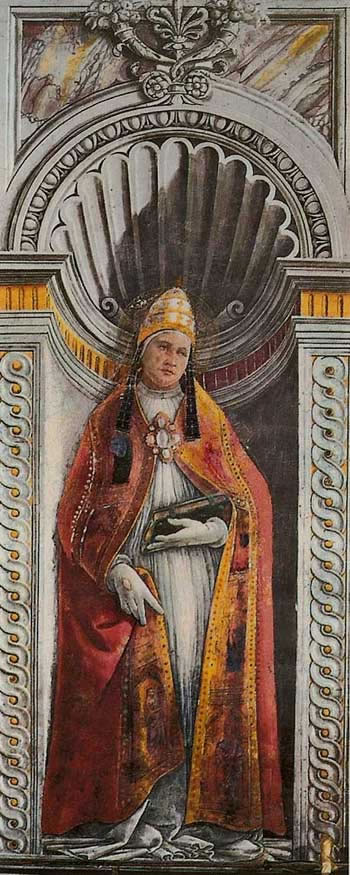
    Image: Sandro Botticelli, Pope Saint Evaristus, fresco in the Sistine Chapel, 1481. Public domain, via Wikimedia Commons. (source)

    Commemoration (on a IV Class feria) · Liturgical colour: Red

    This site follows the traditional Roman calendar of 1962, as found in the 1962 Roman Missal used at the Traditional Latin Mass. Some feast days fall on different dates than in the General Roman Calendar of 1969, revised after the Second Vatican Council.

    Tu es Petrus, et super hanc petram ædificabo Ecclesiam meam.
    Thou art Peter; and upon this rock I will build my church.

    Matthew 16:18

    A Note on Today

    In the 1962 calendar, October 26 is a weekday (a feria of the fourth class) on which the Church makes a commemoration of St. Evaristus. The Mass may be of the feria with his commemoration, or, as many do, of the Saint himself from the Common of Supreme Pontiffs.

    His Life

    Evaristus stands in the earliest list of the Bishops of Rome, handed down by St. Irenaeus in the second century: after Peter came Linus, Cletus (Anacletus), Clement, and then Evaristus. He guided the Church of Rome around the years 99 to 107, in the generation that still remembered the Apostles.

    Very little about his life is certain. The Liber Pontificalis, the old book of the lives of the Popes, says he was of Greek birth, the son of a Jewish father from Bethlehem. It also credits him with dividing the city of Rome into parishes (titles) entrusted to priests, and with appointing deacons to assist the bishop, an early sign of the Church ordering her care for souls in a great city.

    He governed the flock during the reign of the Emperor Trajan, when to be a Christian could cost one’s life. Ancient tradition, kept in the Roman Martyrology and in the Church’s liturgy, honors him as a martyr, and holds that he was buried near the tomb of St. Peter on the Vatican Hill. In him the Church venerates one of the first links in the unbroken chain of shepherds joined to the rock on which Christ built His Church.

    Collect

    Latin

    Gregem tuum, Pastor ætérne, placátus inténde: et, per beátum Evarístum Mártyrem tuum atque Summum Pontíficem, perpétua protectióne custódi; quem totíus Ecclésiæ præstitísti esse pastórem. Per Dominum nostrum Jesum Christum, Filium tuum, qui tecum vivit et regnat in unitate Spiritus Sancti, Deus, per omnia sæcula sæculorum. Amen.

    English

    O Eternal Shepherd, look with mercy upon Thy flock, and keep it under Thy constant protection through blessed Evaristus, Thy Martyr and Sovereign Pontiff, whom Thou didst appoint shepherd of the whole Church. Through our Lord Jesus Christ, Thy Son, who liveth and reigneth with Thee in the unity of the Holy Ghost, God, world without end. Amen.


    Sancte Evariste, ora pro nobis.
    St. Evaristus, pray for us.
  • October 25 – Sts. Chrysanthus and Daria, Martyrs

    October 25 – Sts. Chrysanthus and Daria, Martyrs

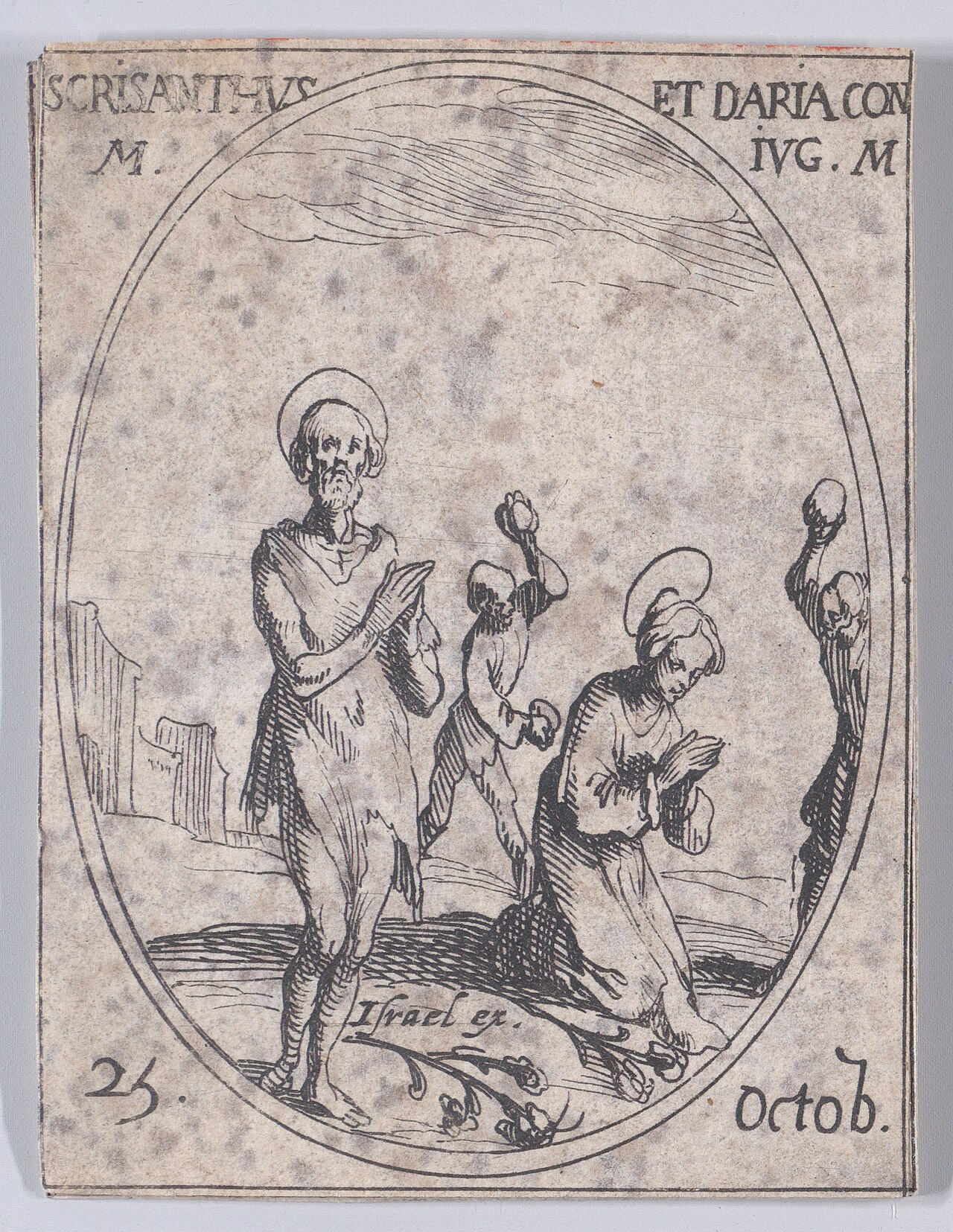
    Image: Jacques Callot, St. Chrysanthus and St. Daria, His Wife, from Les Images de tous les saints, published 1636. The Metropolitan Museum of Art. Public domain (Met Open Access, CC0), via Wikimedia Commons. (source)

    Commemoration (this year it yields to the Sunday Feast of Our Lord Jesus Christ the King, I Class) · Liturgical colour: Red

    This site follows the traditional Roman calendar of 1962, as found in the 1962 Roman Missal used at the Traditional Latin Mass. Some feast days fall on different dates than in the General Roman Calendar of 1969, revised after the Second Vatican Council.

    Quasi morientes, et ecce vivimus.
    As dying, and behold we live.

    2 Corinthians 6:9 (from the Epistle of their Mass)

    A Note on Today

    This year October 25 falls on the last Sunday of October, so the Church keeps the great Feast of Our Lord Jesus Christ the King, a feast of the first class, instituted by Pope Pius XI in 1925. In the 1962 calendar the Sunday feast takes the whole day, and the commemoration of today’s martyrs is not made at Mass. Their names still stand in the Roman Martyrology for this day, and it is fitting to remember them: they gave their lives rather than deny the King whose reign we celebrate.

    Their Story

    According to their ancient Acts, Chrysanthus was the son of Polemius, a nobleman of Alexandria who moved his household to Rome. The young man came across the Gospels and was so struck by them that he sought out a priest named Carpophorus, who instructed and baptized him.

    His father was furious. He tried prison, then pleasures meant to draw his son away from the Faith, and finally arranged a marriage with Daria, a learned and beautiful young woman who served as a priestess in the pagan temples. The plan failed completely. Chrysanthus spoke to Daria of Christ, she received the Faith, and the two agreed to live together in perfect chastity, as brother and sister, devoting themselves to prayer and to bringing others to the Lord.

    Their witness drew many converts in Rome, and that brought them before the authorities. The Acts tell that the tribune Claudius, who was charged with breaking Chrysanthus’ resolve, was himself so moved by his constancy that he became a Christian, with his wife Hilaria, their two sons, and a band of his soldiers; all of them later died as martyrs.

    Under the Emperor Numerian, around the year 283, Chrysanthus and Daria were taken to a sandpit on the Via Salaria outside Rome, put into it, and buried alive under earth and stones. The Martyrology adds that, some time later, as the faithful gathered at their tomb on the anniversary of their death, the persecutors walled up the entrance and many of those praying there died with them. Their relics were honored in Rome for centuries and were later carried to other churches, including Reggio Emilia in Italy and Münstereifel in Germany.

    Collect

    Latin

    Beatórum Mártyrum tuórum, Dómine, Chrysánthi et Daríæ, quǽsumus, adsit nobis orátio: ut, quos venerámur obséquio, eórum pium júgiter experiámur auxílium. Per Dominum nostrum Jesum Christum, Filium tuum, qui tecum vivit et regnat in unitate Spiritus Sancti, Deus, per omnia saecula saeculorum. Amen.

    English

    May the prayer of Thy blessed Martyrs Chrysanthus and Daria, we beseech Thee, O Lord, be with us: that we may ever know the loving help of those whom we venerate with devotion. Through our Lord Jesus Christ, Thy Son, who liveth and reigneth with Thee in the unity of the Holy Ghost, God, world without end. Amen.


    Sancti Chrysanthe et Daria, orate pro nobis.
    Sts. Chrysanthus and Daria, pray for us.

  • October 24 – St. Raphael the Archangel

    October 24 – St. Raphael the Archangel

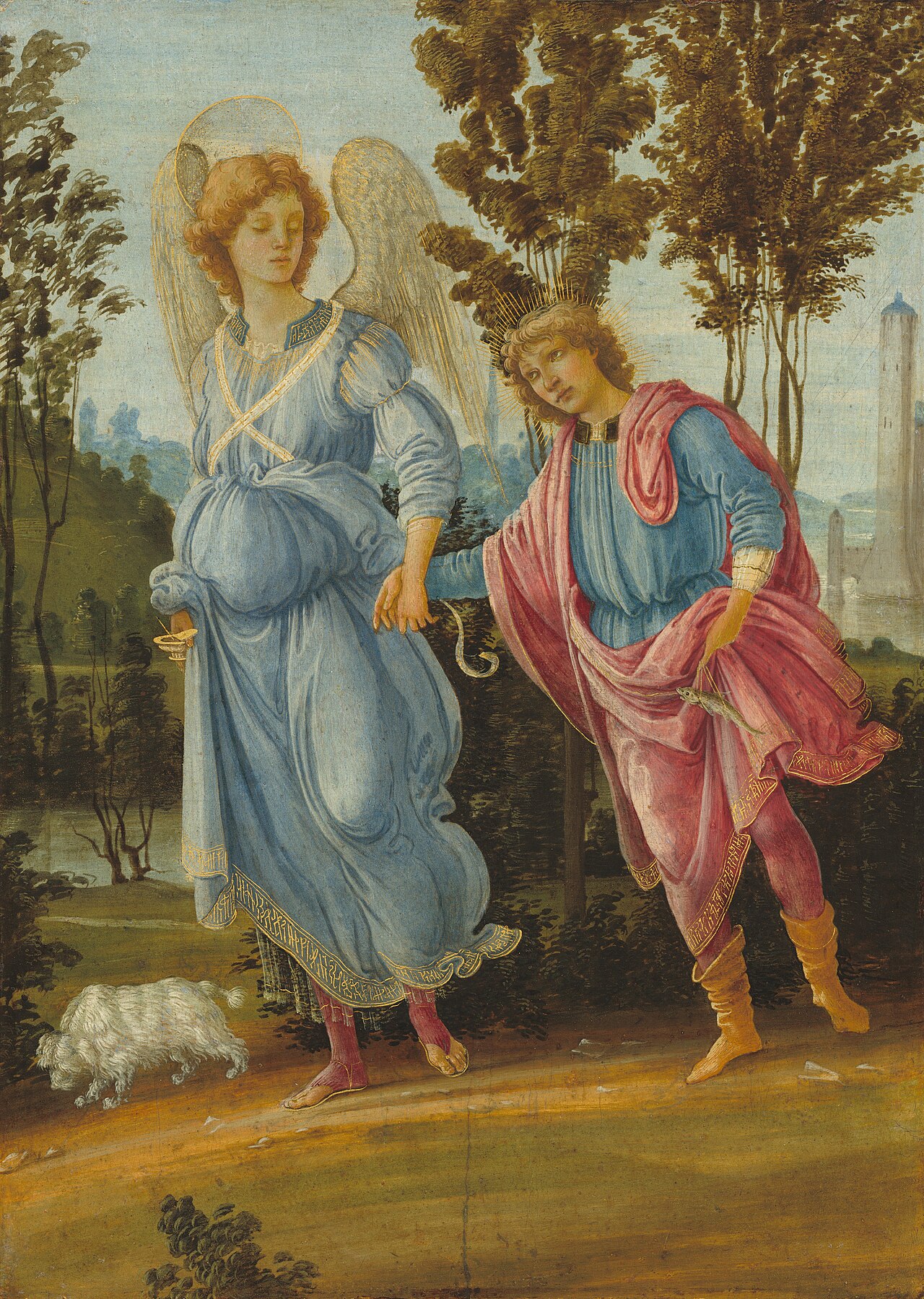
    Image: Filippino Lippi, Tobias and the Angel, c. 1472–1482. National Gallery of Art, Washington. Public domain, via Wikimedia Commons. (source)

    III Class · Liturgical colour: White

    This site follows the traditional Roman calendar of 1962, as found in the 1962 Roman Missal used at the Traditional Latin Mass. Some feast days fall on different dates than in the General Roman Calendar of 1969, revised after the Second Vatican Council.

    Et nunc misit me Dominus ut curarem te, et Saram uxorem filii tui a daemonio liberarem.
    And now the Lord hath sent me to heal thee, and to deliver Sara thy son’s wife from the devil.

    Tobias 12:14

    About St. Raphael

    Raphael is one of only three angels named in Holy Scripture, together with Michael and Gabriel. His name means “God heals” or “the medicine of God,” and everything we are told about him fits that name.

    His story is told in the Book of Tobias. The devout Tobit, an Israelite living in exile at Nineveh, had been left blind after years of faithfully burying the dead of his people. Needing to recover a sum of money left in distant Media, he sent his son Tobias on the long journey. A young man offered himself as a guide, calling himself Azarias. It was Raphael, hidden in human form.

    On the way the angel protected Tobias from danger, had him keep the gall of a great fish caught in the Tigris, and led him to the house of his kinsman Raguel. There Tobias married Raguel’s daughter Sara, whom Raphael freed from the evil spirit that had tormented her. When they returned home, at the angel’s word Tobias anointed his father’s eyes with the fish’s gall, and Tobit’s sight was restored.

    Only then did the guide reveal who he was: one of the seven who stand before the Lord, who had carried the family’s prayers, tears and works of mercy up to God. He bade them bless God and give Him thanks, and vanished from their sight.

    For this reason the Church invokes St. Raphael as the patron of travellers, of the sick and of those who care for them, of the blind, and of young people seeking a good marriage. Many also see him in the angel who stirred the healing waters of the pool of Bethsaida (John 5:4). His feast was extended to the whole Church by Pope Benedict XV in 1921.

    Collect

    Latin

    Deus, qui beatum Raphaelem Archangelum Tobiae famulo tuo comitem dedisti in via: concede nobis famulis tuis; ut ejusdem semper protegamur custodia et muniamur auxilio. Per Dominum nostrum Jesum Christum, Filium tuum, qui tecum vivit et regnat in unitate Spiritus Sancti, Deus, per omnia saecula saeculorum. Amen.

    English

    O God, who didst give blessed Raphael the Archangel to Thy servant Tobias as a companion on his journey: grant unto us Thy servants, that we may ever be guarded by his protection and strengthened by his help. Through our Lord Jesus Christ, Thy Son, who liveth and reigneth with Thee in the unity of the Holy Ghost, God, world without end. Amen.


    Sancte Raphael, ora pro nobis.
    St. Raphael, pray for us.

  • October 23 – St. Anthony Mary Claret, Bishop and Confessor

    October 23 – St. Anthony Mary Claret, Bishop and Confessor

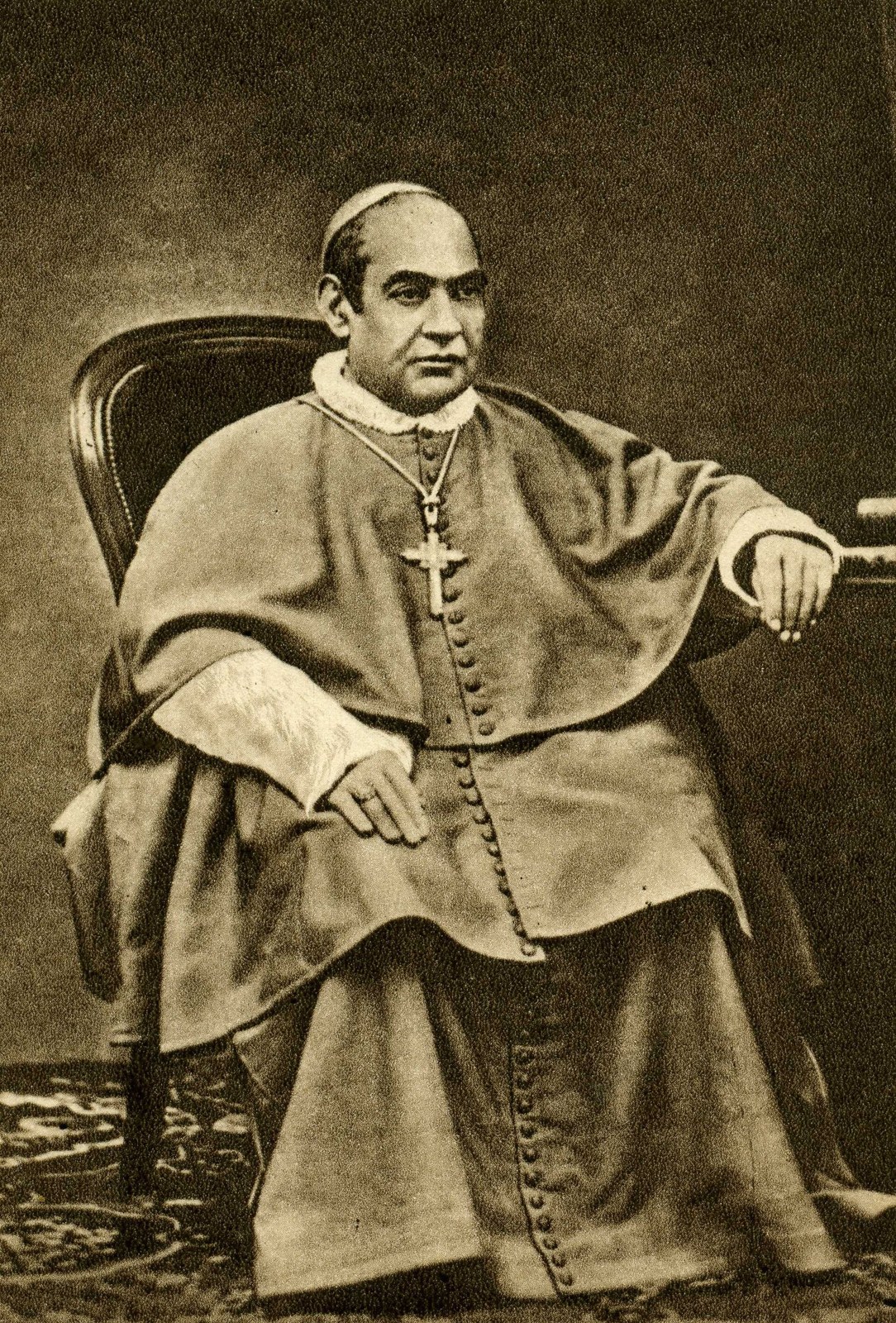
    Image: Photograph of St. Anthony Mary Claret, c. 1860. Public domain, via Wikimedia Commons. (source)

    III Class · Liturgical colour: White

    This site follows the traditional Roman calendar of 1962, as found in the 1962 Roman Missal used at the Traditional Latin Mass. Some feast days fall on different dates than in the General Roman Calendar of 1969, revised after the Second Vatican Council.

    Spiritus Domini super me: evangelizare pauperibus misit me.
    The Spirit of the Lord is upon me: He hath sent me to preach the gospel to the poor.

    Luke 4:18

    His Life

    Anthony Mary Claret was born in 1807 at Sallent, in Catalonia, Spain, the son of a devout family of weavers. As a young man he worked at the loom himself and showed real talent for the trade, but God was calling him to something else. He entered the seminary at Vic and was ordained a priest in 1835.

    After some years in parish work he went to Rome, hoping to be sent to the foreign missions. Illness brought him back to Spain, and there Providence showed him his true field. As an apostolic missionary he travelled on foot through the towns and villages of Catalonia and later the Canary Islands, preaching missions, hearing confessions for hours on end, and writing and spreading a great number of good books and pamphlets for ordinary people.

    In 1849 he founded the Congregation of Missionary Sons of the Immaculate Heart of Mary, known today as the Claretians. Soon afterward he was named Archbishop of Santiago de Cuba. There he proved a tireless shepherd: he restored the seminary, reformed the clergy, visited his whole vast diocese, set up works of charity for the poor, and founded a congregation of teaching sisters for the Christian education of girls. His fearless preaching against injustice made him enemies, and he survived an attempt on his life.

    Recalled to Madrid as confessor to Queen Isabella II, he lived at court with great simplicity and penance, using his position to serve the Church. At the First Vatican Council he spoke strongly in defence of papal infallibility. All his life he promoted love of the Most Blessed Sacrament, devotion to the Immaculate Heart of Mary, and the daily Rosary.

    Driven into exile by revolution, he died at the Cistercian monastery of Fontfroide in France on October 24, 1870. Pope Pius XI beatified him, and Pope Pius XII canonized him in 1950.

    Collect

    Latin

    Deus, qui beatum Antonium Mariam Confessorem tuum atque Pontificem, apostolicis virtutibus sublimasti, et per eum novas in Ecclesia clericorum ac virginum familias collegisti: concede, quaesumus; ut, ejus dirigentibus monitis ac suffragantibus meritis, animarum salutem quaerere jugiter studeamus. Per Dominum nostrum Jesum Christum, Filium tuum, qui tecum vivit et regnat in unitate Spiritus Sancti, Deus, per omnia saecula saeculorum. Amen.

    English

    O God, who didst raise blessed Anthony Mary, Thy Confessor and Bishop, to the heights of apostolic virtue, and through him didst gather new families of clerics and virgins in Thy Church: grant, we beseech Thee, that guided by his counsels and helped by his merits, we may ever strive to seek the salvation of souls. Through our Lord Jesus Christ, Thy Son, who liveth and reigneth with Thee in the unity of the Holy Ghost, God, world without end. Amen.


    Sancte Antoni Maria, ora pro nobis.
    St. Anthony Mary, pray for us.

  • October 22 – St. Mary Salome, Holy Woman of the Gospel

    October 22 – St. Mary Salome, Holy Woman of the Gospel

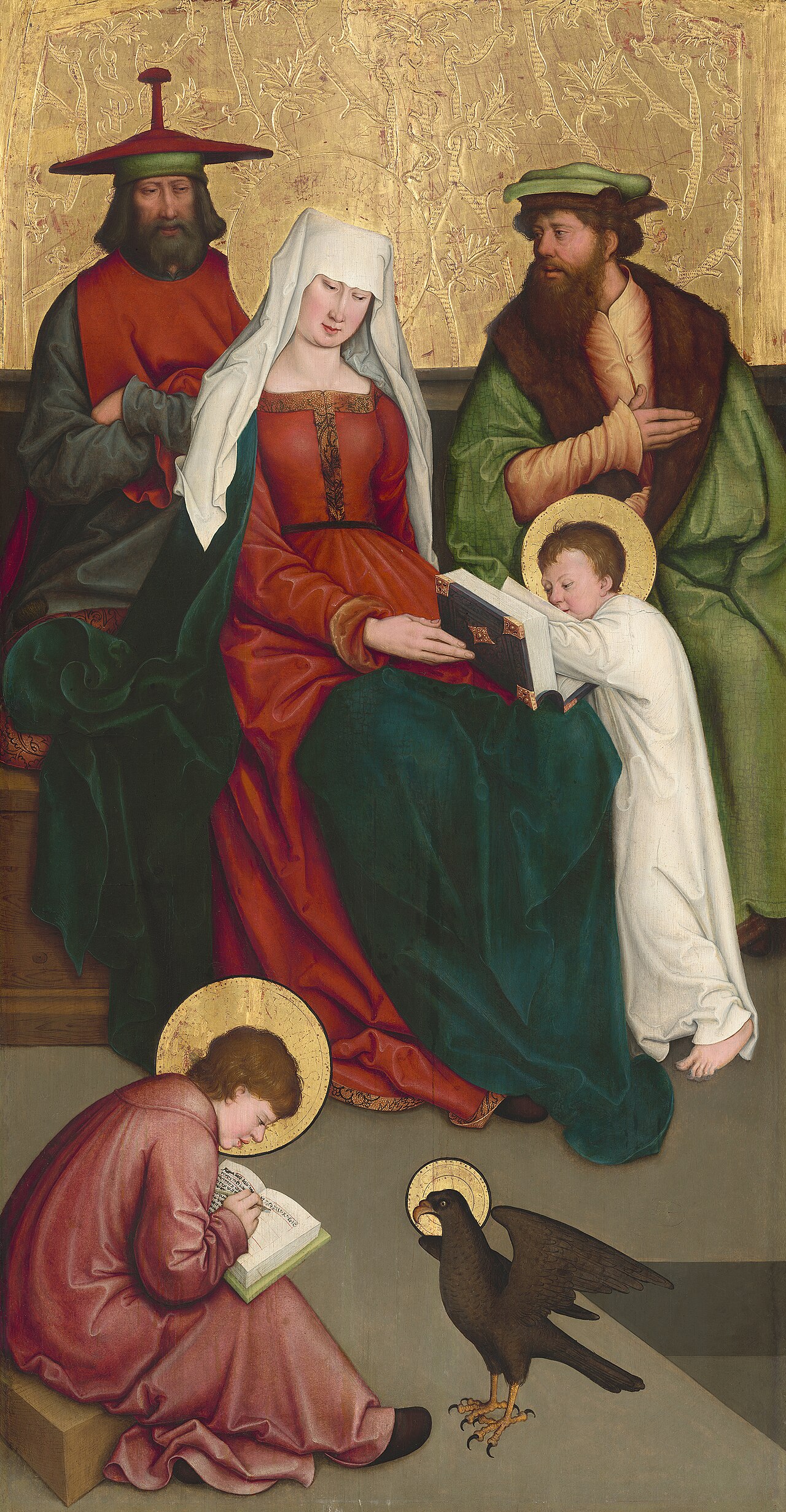
    Image: Bernhard Strigel, Saint Mary Salome and Her Family, c. 1520–1528. National Gallery of Art, Washington. Public domain (NGA Open Access, CC0), via Wikimedia Commons. (source)

    Feria (saint from the Roman Martyrology) · Liturgical colour: Green

    This site follows the traditional Roman calendar of 1962, as found in the 1962 Roman Missal used at the Traditional Latin Mass. Some feast days fall on different dates than in the General Roman Calendar of 1969, revised after the Second Vatican Council.

    Et cum transisset sabbatum, Maria Magdalene, et Maria Jacobi, et Salome emerunt aromata, ut venientes ungerent Jesum.
    And when the sabbath was past, Mary Magdalen, and Mary the mother of James, and Salome, bought sweet spices, that coming, they might anoint Jesus.

    Mark 16:1

    A Feria

    In the traditional 1962 calendar, October 22 is a feria: no saint’s feast is kept at Mass today, and the Mass is that of the preceding Sunday. So that every day has its saint, today’s entry is taken from the traditional Roman Martyrology, which reads for this day: “At Jerusalem, St. Mary Salome, who, as we read in the Gospel, piously attended to the burial of our Lord.”

    Her Life

    Salome was the wife of Zebedee, the fisherman of Galilee, and the mother of two of the Twelve: James the Greater and John, the beloved disciple. When Our Lord called her sons from their father’s boat, she did not hold them back. She herself became one of the holy women who followed Jesus and ministered to Him.

    The Gospel shows her as a mother eager for her sons. She once came to Jesus asking that James and John might sit at His right and left hand in His kingdom. Our Lord answered by asking whether they could drink the chalice He was about to drink, teaching her that glory in His kingdom is reached through the Cross.

    She learned that lesson well. When most of the disciples had fled, Salome stood with the other faithful women watching at Calvary. And when the sabbath was over, at dawn on the first day of the week, she went with Mary Magdalen and Mary the mother of James, carrying spices to anoint His body. Among the first to find the tomb empty, she was among the first to hear that He had risen.

    Her memory has long been honoured in the Church as one of the myrrh-bearing women, a model of loyal love that does not abandon Christ in His suffering.

    Collect

    Latin

    Collect of the preceding Sunday (21st after Pentecost), said on today’s feria: Familiam tuam, quaesumus, Domine, continua pietate custodi: ut a cunctis adversitatibus, te protegente, sit libera, et in bonis actibus tuo nomini sit devota. Per Dominum nostrum Jesum Christum, Filium tuum, qui tecum vivit et regnat in unitate Spiritus Sancti, Deus, per omnia saecula saeculorum. Amen.

    English

    Collect of the preceding Sunday (21st after Pentecost), said on today’s feria: Keep, we beseech Thee, O Lord, Thy household in continual godliness, that through Thy protection it may be free from all adversities, and devoutly given to good works for the glory of Thy name. Through our Lord Jesus Christ, Thy Son, who liveth and reigneth with Thee in the unity of the Holy Ghost, God, world without end. Amen.


    Sancta Maria Salome, ora pro nobis.
    St. Mary Salome, pray for us.

  • October 21 – St. Hilarion, Abbot, and St. Ursula and Companions

    October 21 – St. Hilarion, Abbot, and St. Ursula and Companions

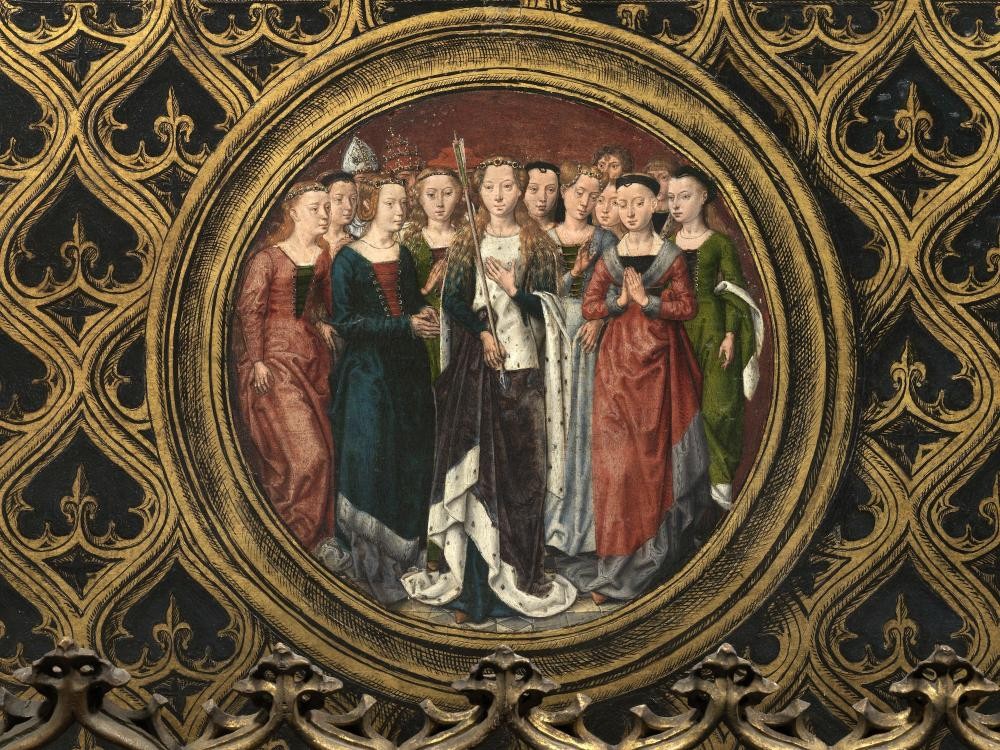
    Image: Hans Memling, St. Ursula and her companion virgins, painted medallion from the roof of the Shrine of St. Ursula, 1489. Sint-Janshospitaal (Memling Museum), Bruges. Public domain.

    III Class, with Commemoration of St. Ursula and Companions, Virgins and Martyrs · Liturgical colour: White

    This site follows the traditional Roman calendar of 1962, as found in the 1962 Roman Missal used at the Traditional Latin Mass. Some feast days fall on different dates than in the General Roman Calendar of 1969, revised after the Second Vatican Council.

    Os justi meditabitur sapientiam, et lingua ejus loquetur judicium.
    The mouth of the just shall meditate wisdom, and his tongue shall speak judgment.

    Psalm 36:30

    St. Hilarion

    Hilarion was born about the year 291 at Tabatha, a village near Gaza in Palestine, to pagan parents. Sent as a boy to study at Alexandria, he excelled in learning and character, and there he came to believe in Jesus Christ. He was often in church, devoted to fasting and prayer, and indifferent to the pleasures that drew other young men.

    Hearing of the fame of St. Anthony, he went into the Egyptian desert to see him, and stayed two months learning the hermit’s way of life. On returning home he found his parents dead, gave his inheritance to the poor, and, not yet fifteen years old, went back into the wilderness near Gaza. There he built a tiny hut, scarcely large enough to hold him, and slept on the ground. He lived on a few figs and the juice of herbs, never eating before sunset, and spent his days reading and pondering the Holy Scriptures.

    By humility and continual prayer he overcame many fierce temptations of the devil, and God worked many miracles through him, especially the casting out of evil spirits. Disciples gathered around him, and monasteries grew up across Palestine, so that he is honoured as the father of monastic life in that land. Fleeing the crowds his fame attracted, he wandered to Egypt, Sicily, Dalmatia and finally Cyprus, always seeking solitude.

    He died on Cyprus about the year 371, at the age of eighty. St. Jerome, who wrote his life, records his last words as he struggled with death: “Go forth, my soul, what do you fear? Go forth; why do you hesitate? For nearly seventy years you have served Christ, and are you afraid to die?”

    St. Ursula and Companions

    Today the Church also commemorates St. Ursula and her companions, virgins and martyrs, venerated since ancient times at Cologne on the Rhine. An inscription in the church built over their tomb tells of a company of holy virgins who were put to death there for Christ in the early centuries of the Church. Later tradition made Ursula a Christian princess from Britain who, returning from a pilgrimage with her companions, was slain with them by the Huns at Cologne rather than give up her faith and her consecration to God.

    Their story became one of the best loved of the Middle Ages, painted by masters such as Hans Memling, whose shrine of St. Ursula in Bruges is shown above. St. Ursula is the patroness of the Ursuline Sisters, founded by St. Angela Merici for the Christian education of girls.

    Collect

    Latin

    Intercessio nos, quaesumus, Domine, beati Hilarionis Abbatis commendet: ut, quod nostris meritis non valemus, ejus patrocinio assequamur. Per Dominum nostrum Jesum Christum, Filium tuum, qui tecum vivit et regnat in unitate Spiritus Sancti, Deus, per omnia saecula saeculorum. Amen.

    Commemoratio Ss. Ursulae et Sociarum: Da nobis, quaesumus, Domine Deus noster, sanctarum Virginum et Martyrum tuarum Ursulae et Sociarum ejus palmas incessabili devotione venerari: ut, quas digna mente non possumus celebrare, humilibus saltem frequentemus obsequiis. Per Dominum nostrum.

    English

    May the intercession of blessed Hilarion, the Abbot, commend us to Thee, O Lord, we beseech Thee, that what we cannot obtain by our own merits we may gain through his patronage. Through our Lord Jesus Christ, Thy Son, who liveth and reigneth with Thee in the unity of the Holy Ghost, God, world without end. Amen.

    Commemoration of St. Ursula and Companions: Grant us, we beseech Thee, O Lord our God, to venerate with unceasing devotion the victories of Thy holy Virgins and Martyrs, Ursula and her companions; that, though we cannot honour them as they deserve, we may at least offer them our humble homage. Through our Lord.


    Sancte Hilarion, Sancta Ursula cum Sociis, orate pro nobis.
    St. Hilarion, St. Ursula and companions, pray for us.

  • October 20 – St. John Cantius, Confessor

    October 20 – St. John Cantius, Confessor

    Image: Taddeo (Tadeusz) Kuntze, Miracle of St. John Cantius, c. 1767. National Museum in Kraków. Public domain, via Wikimedia Commons. (source)

    III Class · Liturgical colour: White

    This site follows the traditional Roman calendar of 1962, as found in the 1962 Roman Missal used at the Traditional Latin Mass. Some feast days fall on different dates than in the General Roman Calendar of 1969, revised after the Second Vatican Council.

    Beati misericordes, quoniam ipsi misericordiam consequentur.
    Blessed are the merciful: for they shall obtain mercy.

    Matthew 5:7

    His Life

    John was born in 1390 in the small town of Kęty (in Latin, Kenty, from which he takes the name Cantius), not far from Kraków in southern Poland. He studied at the University of Kraków, was ordained a priest, and spent most of his long life there teaching Sacred Scripture and theology. His learning was joined to a deep humility, and his students remembered him as much for his holiness as for his lectures.

    For a time he was sent as parish priest to Olkusz. Fearing the great responsibility of the care of souls, he afterward returned to his chair at the university. He lived very austerely, sleeping little and on the floor, eating sparingly, and for many years abstaining from meat altogether. He went on pilgrimage to Jerusalem, and four times he made the journey to Rome on foot.

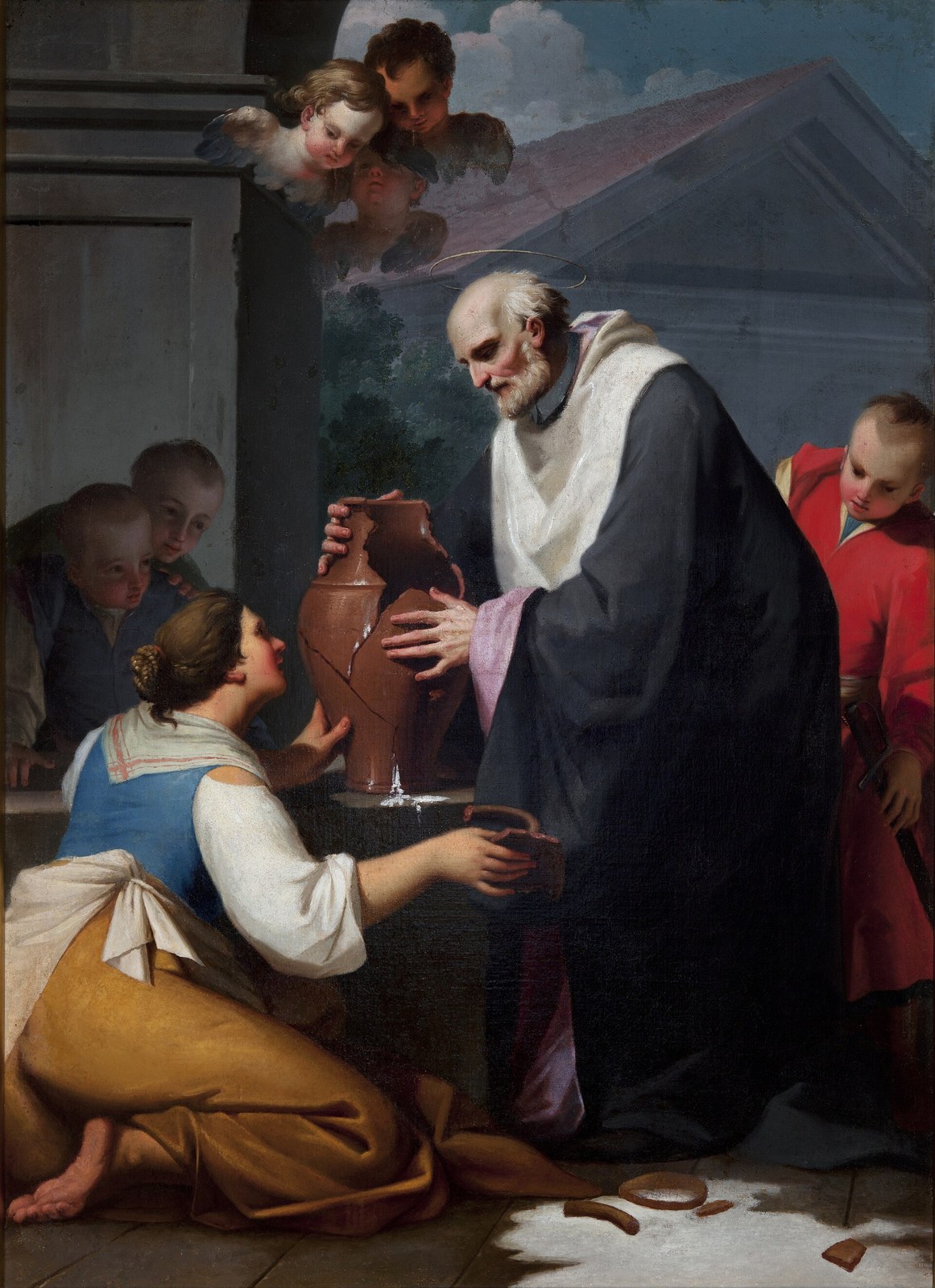
    His charity to the poor was boundless. Whatever he had he gave away, and more than once he gave his own cloak and shoes to a beggar and walked home in his long cassock so that no one would notice. Once, robbed on the road, he told the thieves he had nothing more; then, remembering coins sewn into his cloak, he ran after them to hand those over too. Struck by his honesty, the robbers returned everything they had taken. A beloved tradition, shown in the painting above, tells how he comforted a weeping servant girl who had broken her master’s jug and made it whole again.

    He died in Kraków on Christmas Eve, 1473, at the age of eighty-three. Pope Clement XIII canonized him in 1767, and he is honoured as a patron of Poland and Lithuania and of university scholars.

    Collect

    Latin

    Da, quaesumus, omnipotens Deus: ut, sancti Joannis Confessoris exemplo in scientia Sanctorum proficientes atque aliis misericordiam exhibentes; ejus meritis, indulgentiam apud te consequamur. Per Dominum nostrum Jesum Christum, Filium tuum, qui tecum vivit et regnat in unitate Spiritus Sancti, Deus, per omnia saecula saeculorum. Amen.

    English

    Grant, we beseech Thee, almighty God, that, following the example of blessed John, Thy Confessor, we may advance in the knowledge of the Saints and, by showing mercy to others, obtain Thy forgiveness through his merits. Through our Lord Jesus Christ, Thy Son, who liveth and reigneth with Thee in the unity of the Holy Ghost, God, world without end. Amen.


    Sancte Joannes Cantie, ora pro nobis.
    St. John Cantius, pray for us.