✠

Saints of the Day

Traditional Roman Calendar (1962 Missal)

This site follows the traditional Roman calendar of 1962, as found in the 1962 Roman Missal used at the Traditional Latin Mass. Some feast days fall on different dates than in the General Roman Calendar of 1969, revised after the Second Vatican Council.

Category: Saint of the Day

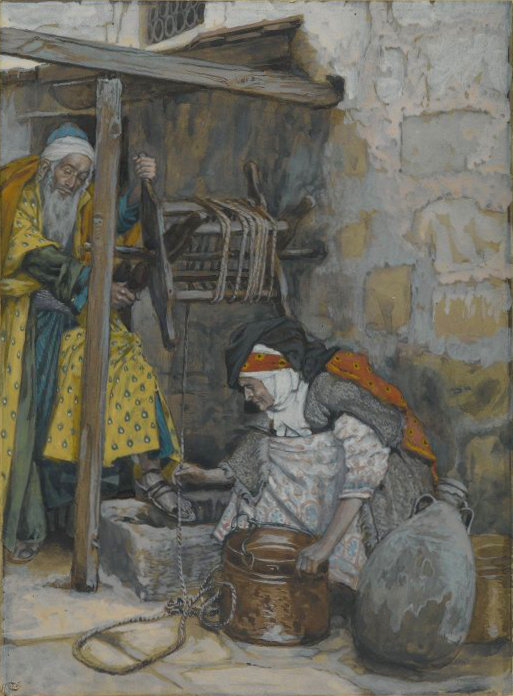
  • November 5 – Sts. Zachary and Elizabeth, Parents of St. John the Baptist

    November 5 – Sts. Zachary and Elizabeth, Parents of St. John the Baptist

    Image: James Tissot, Portrait of Zacharias and Elizabeth, c. 1886–94. Brooklyn Museum. Public domain, via Wikimedia Commons.

    Feria (from the Roman Martyrology) · Liturgical colour: Green

    This site follows the traditional Roman calendar of 1962, as found in the 1962 Roman Missal used at the Traditional Latin Mass. Some feast days fall on different dates than in the General Roman Calendar of 1969, revised after the Second Vatican Council.

    Erant autem justi ambo ante Deum, incedentes in omnibus mandatis et justificationibus Domini sine querela.
    And they were both just before God, walking in all the commandments and justifications of the Lord without blame.

    Luke 1:6

    About Today

    Today is a feria in the 1962 calendar, with no saint’s feast in the Missal. The saints honored here are taken from the traditional Roman Martyrology for November 5.

    Their Lives

    Zachary was a priest of the course of Abia, and his wife Elizabeth was a daughter of Aaron and a kinswoman of the Blessed Virgin Mary. They lived blamelessly before God, yet they had no child, and both had grown old.

    While Zachary was offering incense in the Temple, the Angel Gabriel appeared and told him that Elizabeth would bear a son, to be named John, who would go before the Lord in the spirit and power of Elias. Because Zachary doubted, he was struck mute until the promise was fulfilled.

    Elizabeth conceived, and in her sixth month she was visited by Mary, who was carrying Our Lord. At Mary’s greeting the child leapt in Elizabeth’s womb, and filled with the Holy Ghost she cried out, “Blessed art thou among women, and blessed is the fruit of thy womb.” When John was born and named, Zachary’s tongue was loosed, and he sang the Benedictus, the canticle the Church still prays each morning at Lauds.

    A Lesson for Today

    Zachary and Elizabeth teach patient fidelity: they kept God’s law through long years of unanswered prayer, and God answered in His own time beyond all they had asked.


    Sancti Zacharia et Elisabeth, orate pro nobis.
    Sts. Zachary and Elizabeth, pray for us.
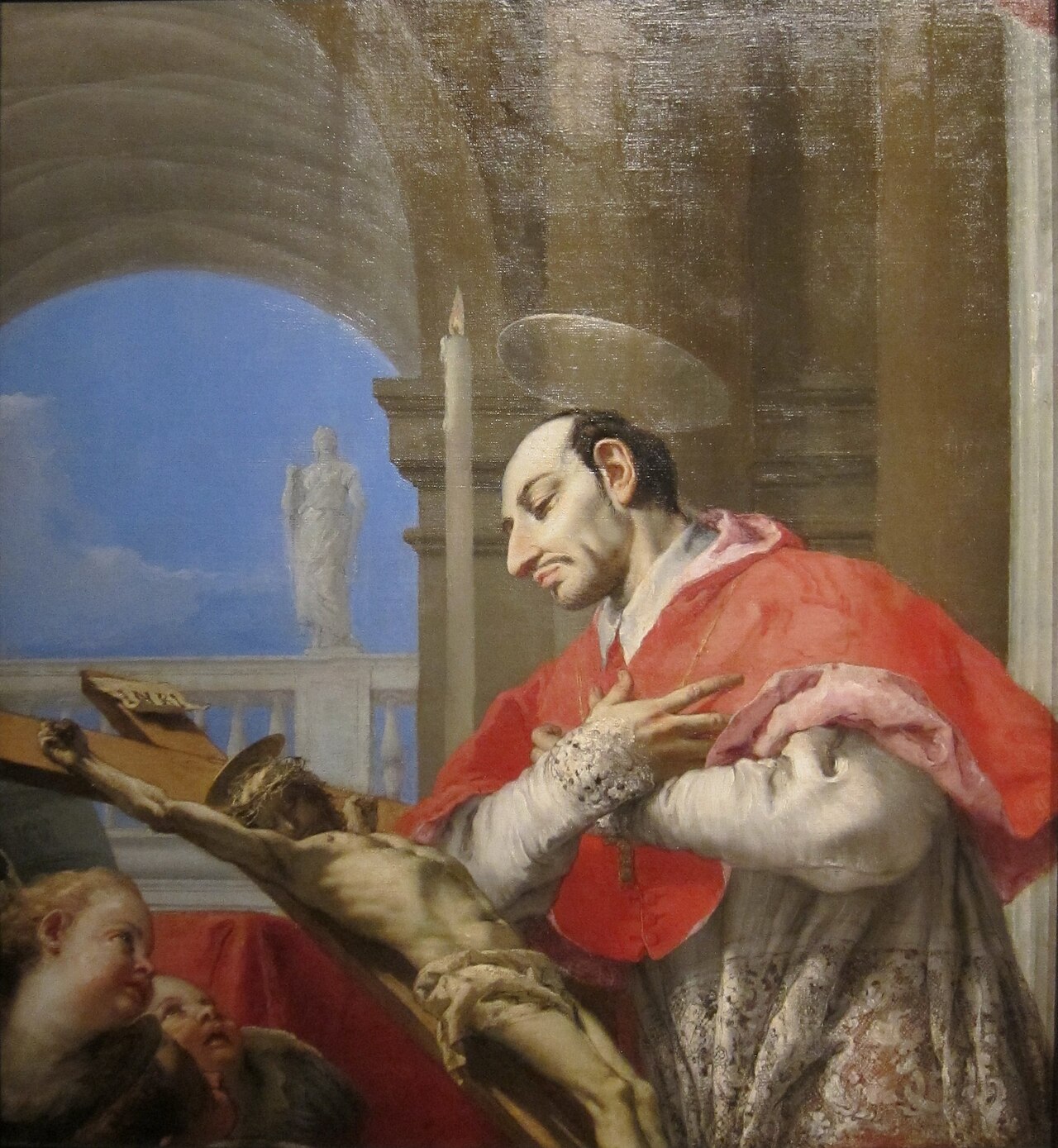
  • November 4 – St. Charles Borromeo, Bishop and Confessor

    November 4 – St. Charles Borromeo, Bishop and Confessor

    Image: Giovanni Battista Tiepolo, Saint Charles Borromeo, 1767–69. Public domain, via Wikimedia Commons.

    III Class · Liturgical colour: White

    This site follows the traditional Roman calendar of 1962, as found in the 1962 Roman Missal used at the Traditional Latin Mass. Some feast days fall on different dates than in the General Roman Calendar of 1969, revised after the Second Vatican Council.

    Bonus pastor animam suam dat pro ovibus suis.
    The good shepherd giveth his life for his sheep.

    John 10:11

    His Life

    Charles Borromeo was born in 1538 at Arona, on Lake Maggiore, to a noble family related to the Medici. His uncle became Pope Pius IV, who called the young Charles to Rome, made him a cardinal while still in his early twenties, and entrusted him with the Archdiocese of Milan.

    Rather than enjoy the honors of his rank, Charles gave himself wholly to the work of the Church. He played a leading part in bringing the Council of Trent to its close and in preparing the Roman Catechism. Once in Milan, he set about putting the Council’s decrees into practice: he founded seminaries for the training of priests, held synods, visited even the poorest mountain parishes, and restored discipline among clergy and religious, even at the risk of his own life.

    When plague struck Milan in 1576, many in authority fled, but Charles remained. He nursed the sick, sold his own goods to feed the poor, and led processions of penance through the streets. Worn out by labor and austerity, he died in 1584 at the age of forty-six, and was canonized in 1610.

    Today the Church also commemorates Sts. Vitalis and Agricola, martyrs of Bologna.

    A Lesson for Today

    St. Charles shows that true reform begins with one’s own life, and that a shepherd’s place is with his flock, above all in times of danger.


    Sancte Carole, ora pro nobis.
    St. Charles, pray for us.

  • November 3 – St. Hubert, Bishop

    November 3 – St. Hubert, Bishop

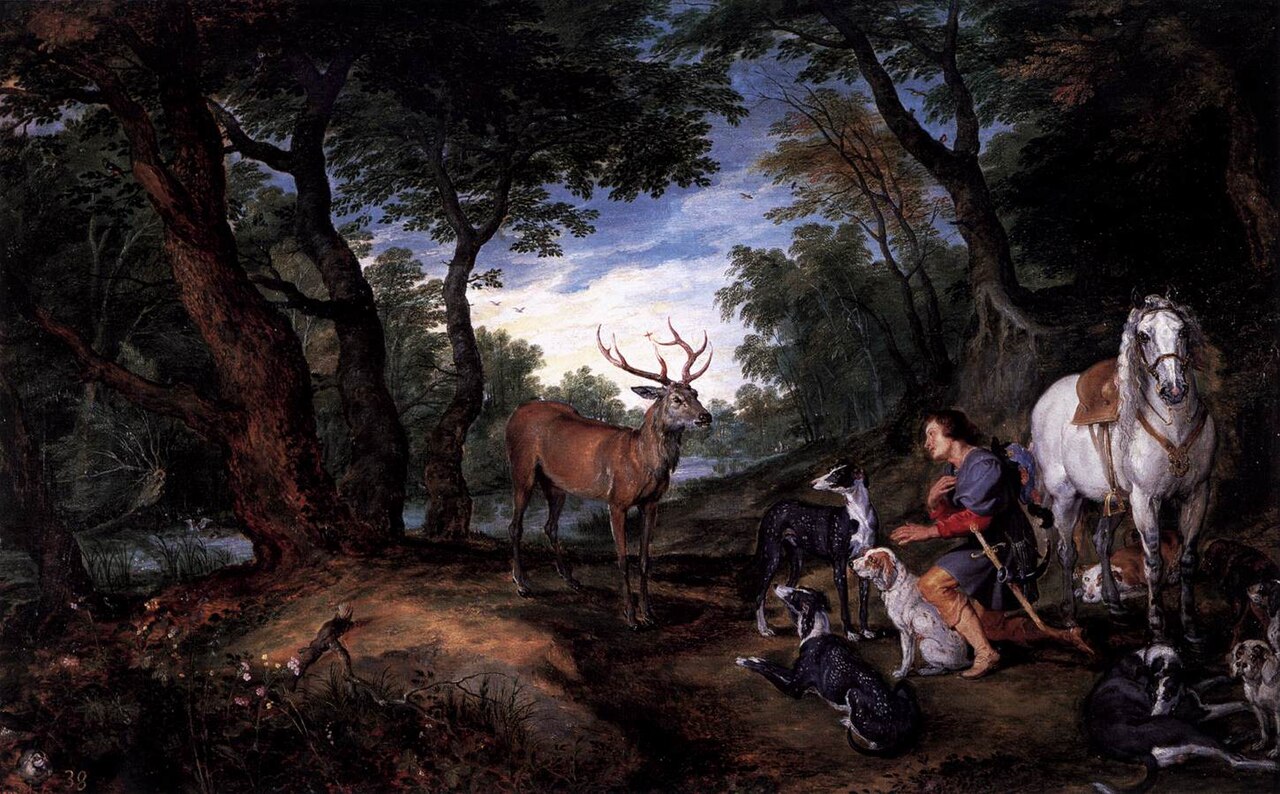
    Image: Jan Brueghel the Elder, The Vision of St Hubert. Public domain, via Wikimedia Commons. (source)

    Feria (from the Roman Martyrology) · Liturgical colour: Green

    This site follows the traditional Roman calendar of 1962, as found in the 1962 Roman Missal used at the Traditional Latin Mass. Some feast days fall on different dates than in the General Roman Calendar of 1969, revised after the Second Vatican Council.

    Quemadmodum desiderat cervus ad fontes aquarum, ita desiderat anima mea ad te, Deus.
    As the hart panteth after the fountains of water, so my soul panteth after Thee, O God.

    Psalm 41:2

    Today in the Calendar

    November 3 is a feria in the traditional 1962 calendar: no saint’s feast is kept in the Missal today. The saint shown here is taken from the traditional Roman Martyrology, which lists St. Hubert, bishop, for this day.

    His Life

    Hubert was born in the second half of the seventh century into a noble Frankish family. As a young courtier he loved the pleasures of the world, and above all the hunt, and he gave little thought to God.

    According to the old tradition, while he was hunting one holy day in the forest of the Ardennes, a great stag turned to face him, and between its antlers he saw the figure of Christ crucified. A voice warned him to turn to the Lord or he would soon perish. Shaken, Hubert gave up his worldly ways, placed himself under the guidance of St. Lambert, bishop of Maastricht, and prepared for the priesthood.

    When St. Lambert was murdered around the year 705, Hubert was chosen to succeed him. He moved the see to Liège, where he built a church over the relics of his martyred master, and he laboured tirelessly to bring the Gospel to the still half-pagan people of the Ardennes, destroying idols and caring for the poor. He died about the year 727 and is honoured as the patron of hunters and of all who work in the forests.

    A Lesson for Today

    St. Hubert reminds us that God can meet us in the very middle of our ordinary pursuits. The stag he chased became the sign that turned him toward the One his soul truly longed for.


    Sancte Huberte, ora pro nobis.
    St. Hubert, pray for us.

  • November 2 – St. Victorinus, Bishop and Martyr

    November 2 – St. Victorinus, Bishop and Martyr

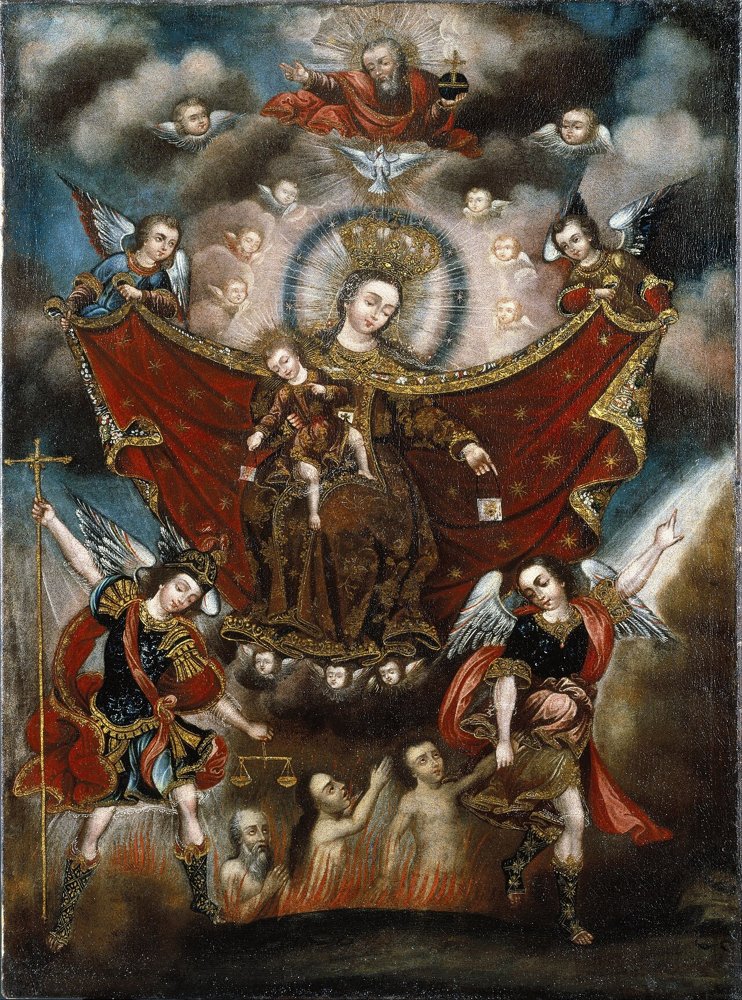
    Image: Unknown artist, Virgin of Carmel Saving Souls in Purgatory, late 17th century. Public domain, via Wikimedia Commons (Google Art Project). (source)

    I Class (All Souls’ Day) · Liturgical colour: Black

    This site follows the traditional Roman calendar of 1962, as found in the 1962 Roman Missal used at the Traditional Latin Mass. Some feast days fall on different dates than in the General Roman Calendar of 1969, revised after the Second Vatican Council.

    Sancta ergo et salubris est cogitatio pro defunctis exorare, ut a peccatis solvantur.
    It is therefore a holy and wholesome thought to pray for the dead, that they may be loosed from sins.

    2 Machabees 12:46

    Today in the Calendar

    November 2 is All Souls’ Day, the Commemoration of All the Faithful Departed, a day of the first class in the traditional 1962 calendar. It is not a saint’s feast: the Mass is a Requiem in black vestments, offered for all the souls still being purified in Purgatory. Because no saint is celebrated in the Missal today, the saint shown here is taken from the traditional Roman Martyrology, which lists St. Victorinus for this day.

    His Life

    Victorinus was bishop of Poetovio in the Roman province of Pannonia, the town later called Pettau and today Ptuj in Slovenia. He lived in the second half of the third century, and he is one of the very first Christian writers to explain the Holy Scriptures in Latin. St. Jerome, who admired his learning, remarks that he knew Greek better than Latin, so his writing was plain, but his thought was deep.

    He wrote commentaries on many books of the Bible, among them Genesis, Exodus, Isaiah, Ezekiel, Matthew and the Song of Songs. Most are lost, but his commentary on the Apocalypse survives, the oldest Latin commentary on that book that we still have, along with a short work on the creation of the world.

    When the great persecution of the Emperor Diocletian broke out, Victorinus did not abandon his flock. The Martyrology says that after writing many works he was crowned with martyrdom, around the year 304, as St. Jerome relates.

    Praying for the Dead

    All Souls’ Day follows All Saints for a reason. Yesterday the Church looked up to her members who already see God; today she turns to those who died in His grace but still need cleansing before they enter heaven. Our prayers, our sacrifices and above all the Holy Sacrifice of the Mass can help them. On this day every priest may offer three Masses for the departed, and the whole month of November is traditionally given to praying for them.

    It is fitting to remember a bishop who spent his life explaining the Apocalypse on the day the Church prays for the souls who are waiting to join the great multitude before the throne of the Lamb.

    Collect

    Latin

    Fidélium, Deus, ómnium cónditor et redémptor: animábus famulórum famularúmque tuárum remissiónem cunctórum tríbue peccatórum; ut indulgéntiam, quam semper optavérunt, piis supplicatiónibus consequántur: Qui vivis et regnas cum Deo Patre in unitáte Spíritus Sancti, Deus, per ómnia sǽcula sæculórum. Amen.

    English

    O God, the Creator and Redeemer of all the faithful, grant to the souls of Thy servants and handmaids the remission of all their sins, that through our devout prayers they may obtain the pardon which they have always desired: Who livest and reignest with God the Father in the unity of the Holy Ghost, God, world without end. Amen.


    Requiem ætérnam dona eis, Dómine, et lux perpétua lúceat eis. Sancte Victoríne, ora pro nobis.
    Eternal rest grant unto them, O Lord, and let perpetual light shine upon them. St. Victorinus, pray for us.

  • November 1 – All Saints

    November 1 – All Saints

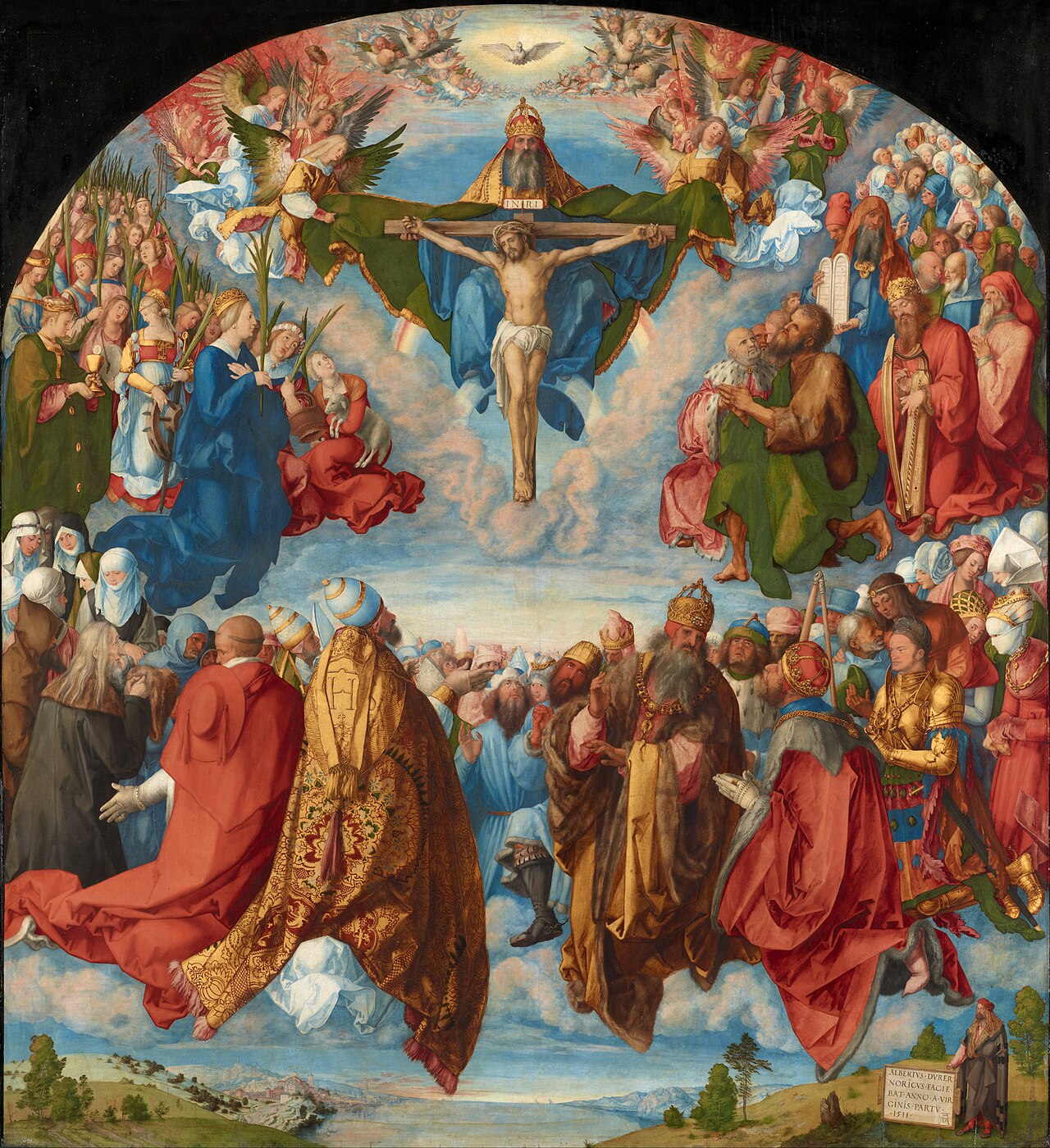
    Image: Albrecht Dürer, Adoration of the Trinity (Landauer Altar), 1511. Kunsthistorisches Museum, Vienna. Public domain, via Wikimedia Commons. (source)

    I Class · Liturgical colour: White

    This site follows the traditional Roman calendar of 1962, as found in the 1962 Roman Missal used at the Traditional Latin Mass. Some feast days fall on different dates than in the General Roman Calendar of 1969, revised after the Second Vatican Council.

    Vidi turbam magnam, quam dinumerare nemo poterat, ex omnibus gentibus… amicti stolis albis, et palmæ in manibus eorum.
    I saw a great multitude, which no man could number, of all nations… clothed with white robes, and palms in their hands.

    Apocalypse 7:9

    The Feast

    Today the Church keeps the Feast of All Saints, a feast of the first class in the traditional 1962 calendar. Because of its high rank it takes the place of this Sunday’s Mass. On this one day she honors every soul who has reached heaven: the great martyrs, doctors, virgins and confessors whose names fill the calendar, and also the countless holy men, women and children whose names are known to God alone.

    Its History

    In the early centuries the Christians of the East kept a common feast of all the martyrs. In Rome, on May 13 in the year 609 or 610, Pope Boniface IV dedicated the ancient pagan temple of the Pantheon as a church in honor of the Blessed Virgin Mary and all the martyrs. A century later Pope Gregory III consecrated a chapel in St. Peter’s Basilica to all the Saints, and Pope Gregory IV extended the feast, now kept on November 1, to the whole Church in the ninth century.

    Its Meaning

    The Epistle of today’s Mass, taken from the Apocalypse of St. John, shows a vast crowd from every nation standing before the throne of God and of the Lamb, dressed in white and holding palms of victory. The Gospel gives the Beatitudes, the road every one of them walked: poverty of spirit, meekness, mourning, hunger for justice, mercy, purity of heart, peacemaking, and patience under persecution.

    The feast reminds us of the Communion of Saints. Those in heaven are not far away; they know us, love us, and pray for us. Their example shows that holiness is possible in every age and state of life, and their company is the home to which we are all called. Tomorrow the Church turns in prayer to the holy souls in Purgatory on All Souls’ Day.

    Collect

    Latin

    Omnípotens sempitérne Deus, qui nos ómnium Sanctórum tuórum mérita sub una tribuísti celebritáte venerári: quǽsumus; ut desiderátam nobis tuæ propitiatiónis abundántiam, multiplicátis intercessóribus, largiáris. Per Dóminum nostrum Jesum Christum, Fílium tuum, qui tecum vivit et regnat in unitáte Spíritus Sancti, Deus, per ómnia sǽcula sæculórum. Amen.

    English

    Almighty and everlasting God, who hast granted us to honor in one solemn festival the merits of all Thy Saints: we beseech Thee that, as our intercessors are multiplied, Thou wouldst bestow upon us the desired abundance of Thy mercy. Through our Lord Jesus Christ, Thy Son, who liveth and reigneth with Thee in the unity of the Holy Ghost, God, world without end. Amen.


    Omnes Sancti et Sanctæ Dei, intercedite pro nobis.
    All ye holy men and women, Saints of God, intercede for us.

  • October 31 – St. Wolfgang, Bishop and Confessor

    October 31 – St. Wolfgang, Bishop and Confessor

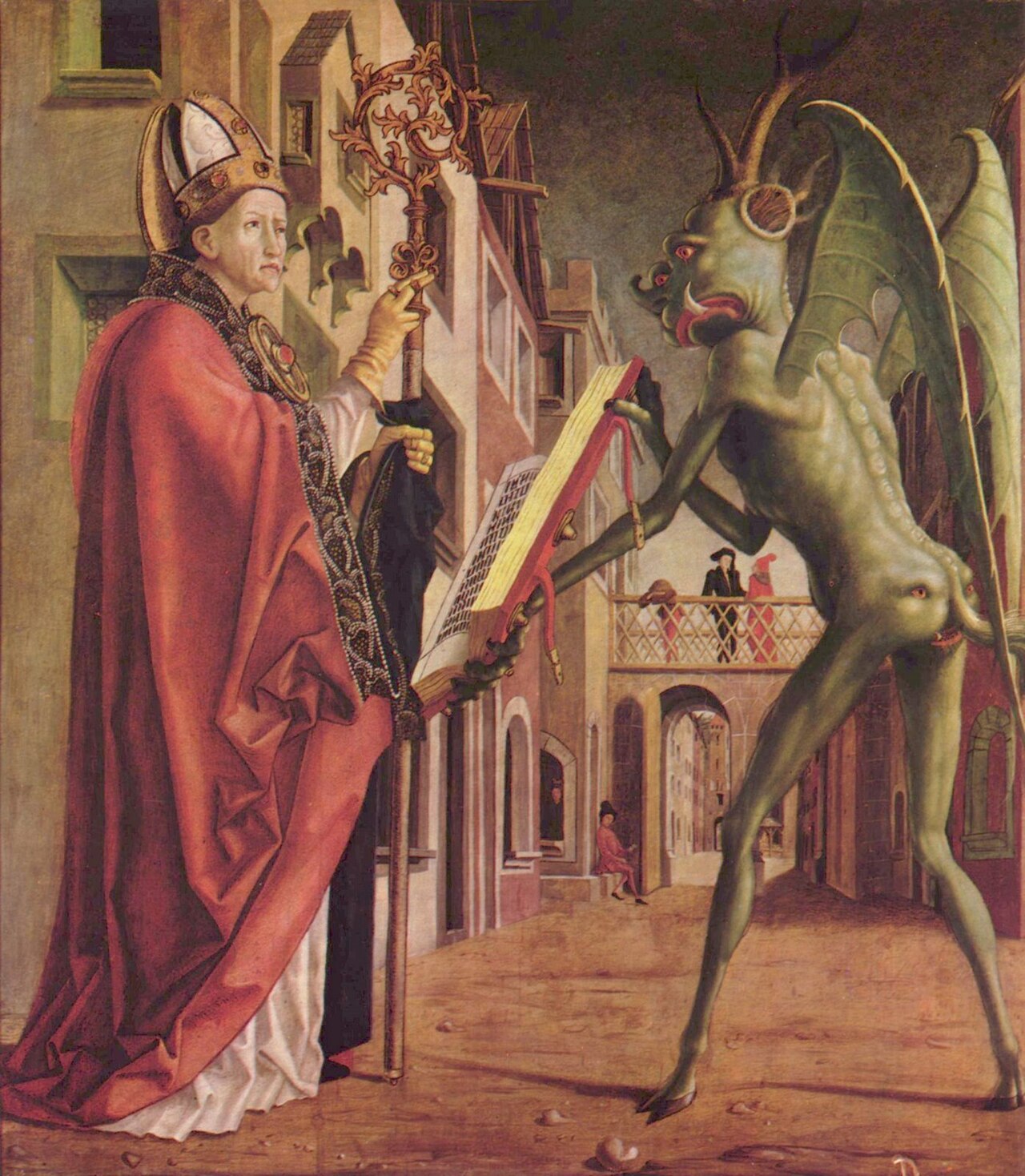
    Image: Michael Pacher, Saint Wolfgang and the Devil, from the Altarpiece of the Church Fathers, 1471–1475. Alte Pinakothek, Munich. Public domain, via Wikimedia Commons. (source)

    Feria (saint from the Roman Martyrology) · Liturgical colour: Green

    This site follows the traditional Roman calendar of 1962, as found in the 1962 Roman Missal used at the Traditional Latin Mass. Some feast days fall on different dates than in the General Roman Calendar of 1969, revised after the Second Vatican Council.

    Bonus pastor animam suam dat pro ovibus suis.
    The good shepherd giveth his life for his sheep.

    John 10:11

    A Feria

    In the traditional 1962 calendar, October 31 is a feria: no saint’s feast is kept at Mass today. For centuries this day was the Vigil of All Saints, but that vigil was removed from the calendar in 1955. So that every day has its saint, today’s entry comes from the traditional Roman Martyrology, which reads: “At Ratisbon, St. Wolfgang, bishop.”

    His Life

    Wolfgang was born around the year 924 in Swabia, in southern Germany. As a boy he was sent to study at the famous abbey school of Reichenau, and later at Würzburg. A gifted student, he went on to teach at the cathedral school of Trier, where he worked to raise the standard of learning and discipline among the clergy.

    Wanting a life given wholly to God, he became a Benedictine monk at the abbey of Einsiedeln, in what is now Switzerland, and there he was ordained a priest by St. Ulric, Bishop of Augsburg. Soon after, he set out as a missionary to the Magyars of Pannonia, a fierce people who had only recently stopped raiding the Christian lands to the west.

    In 972 he was named Bishop of Ratisbon, today’s Regensburg in Bavaria. He kept his monk’s habit and his simple way of life, and he spent the revenues of his diocese on the poor. He preached tirelessly, visited his parishes, corrected careless priests, and restored strict observance in the monasteries, especially the great abbey of St. Emmeram. For the good of souls he willingly gave up part of his own territory so that Bohemia could have its own bishop at Prague.

    He was also entrusted with the education of the young Duke Henry of Bavaria, who later became the holy Emperor St. Henry II. For a time Wolfgang withdrew to live as a hermit beside a lake in the Austrian mountains, a place that still bears his name. Old stories tell how he outwitted the devil there, which is the scene in today’s painting.

    Called back to his flock, he continued his labours until, while travelling on the Danube, he fell ill and died at Pupping, near Linz, on October 31, 994. He was canonized by Pope St. Leo IX in 1052, and he is still loved in Bavaria and Austria as a true shepherd of his people.

    Collect

    Latin

    Da, quǽsumus, omnípotens Deus: ut beáti Wolfgángi Confessóris tui atque Pontíficis veneránda solémnitas, et devotiónem nobis áugeat et salútem. Per Dominum nostrum Jesum Christum, Filium tuum, qui tecum vivit et regnat in unitate Spiritus Sancti, Deus, per omnia sæcula sæculorum. Amen.

    English

    Grant, we beseech Thee, almighty God, that the venerable festival of blessed Wolfgang, Thy Confessor and Bishop, may increase in us both devotion and salvation. Through our Lord Jesus Christ, Thy Son, who liveth and reigneth with Thee in the unity of the Holy Ghost, God, world without end. Amen.


    Sancte Wolfgange, ora pro nobis.
    St. Wolfgang, pray for us.

  • October 30 – St. Alphonsus Rodriguez, Confessor

    October 30 – St. Alphonsus Rodriguez, Confessor

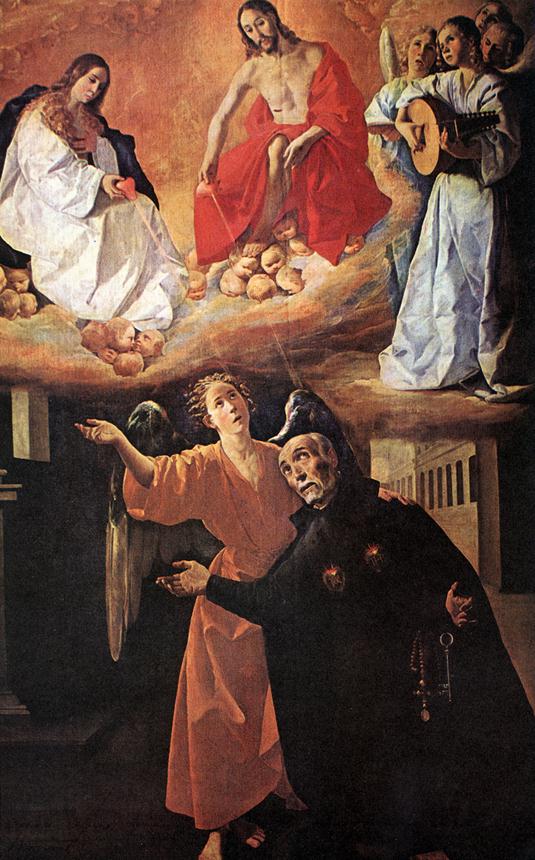
    Image: Francisco de Zurbarán, Vision of Blessed Alonso Rodriguez, 1630. Real Academia de Bellas Artes de San Fernando, Madrid. Public domain, via Wikimedia Commons. (source)

    Feria (saint from the Roman Martyrology) · Liturgical colour: Green

    This site follows the traditional Roman calendar of 1962, as found in the 1962 Roman Missal used at the Traditional Latin Mass. Some feast days fall on different dates than in the General Roman Calendar of 1969, revised after the Second Vatican Council.

    Discite a me, quia mitis sum, et humilis corde.
    Learn of me, because I am meek, and humble of heart.

    Matthew 11:29

    A Feria

    In the traditional 1962 calendar, October 30 is a feria: no saint’s feast is kept at Mass today, and the Mass is of the preceding Sunday. So that every day has its saint, today’s entry comes from the traditional Roman Martyrology, which reads: “At Palma, in the island of Majorca, St. Alphonsus Rodriguez, a lay brother of the Society of Jesus, whom Leo XII beatified and Leo XIII canonized on account of his remarkable humility and constant love of mortification.”

    His Life

    Alphonsus Rodriguez was born in Segovia, Spain, the son of a wool merchant. When his father died, the young man took over the family business, married, and had children. Then sorrow came in waves: the business failed, and within a few years he lost his wife and his children. Instead of growing bitter, he turned his grief toward God and began a life of prayer and penance.

    Close to the age of forty he asked to join the Society of Jesus. He had little schooling and poor health, and at first he was refused. In the end he was accepted as a lay brother, and he was sent to the Jesuit college of Montesión at Palma, on the island of Majorca.

    There he was given the humble post of doorkeeper, and he kept it for most of the rest of his long life. Each time someone knocked he would say in his heart, “I am coming, Lord,” and he answered the door as if Christ Himself stood outside. Students, beggars, nobles and troubled souls all came to that door, and many went away consoled by the quiet porter’s advice and prayers.

    Among the young Jesuits he guided was Peter Claver, whom Alphonsus encouraged to give his life to the missions in the Americas. Claver went on to serve the enslaved Africans arriving at Cartagena, and the two were later canonized together.

    Alphonsus lived in deep obedience and mortification, and he endured long periods of dryness and temptation with patience. He died at Palma in 1617. Pope Leo XII beatified him in 1825, and Pope Leo XIII canonized him in 1888. His life shows that no work is too small to become holy when it is done for the love of God.

    Collect

    Latin

    Deus, qui nos beáti Alphónsi Confessóris tui ánnua solemnitáte lætíficas: concéde propítius; ut, cujus natalítia cólimus, étiam actiónes imitémur. Per Dominum nostrum Jesum Christum, Filium tuum, qui tecum vivit et regnat in unitate Spiritus Sancti, Deus, per omnia sæcula sæculorum. Amen.

    English

    O God, who dost gladden us by the yearly feast of blessed Alphonsus, Thy Confessor: mercifully grant that, as we keep his heavenly birthday, we may also imitate his deeds. Through our Lord Jesus Christ, Thy Son, who liveth and reigneth with Thee in the unity of the Holy Ghost, God, world without end. Amen.


    Sancte Alphonse, ora pro nobis.
    St. Alphonsus, pray for us.

  • October 29 – St. Narcissus, Bishop of Jerusalem

    October 29 – St. Narcissus, Bishop of Jerusalem

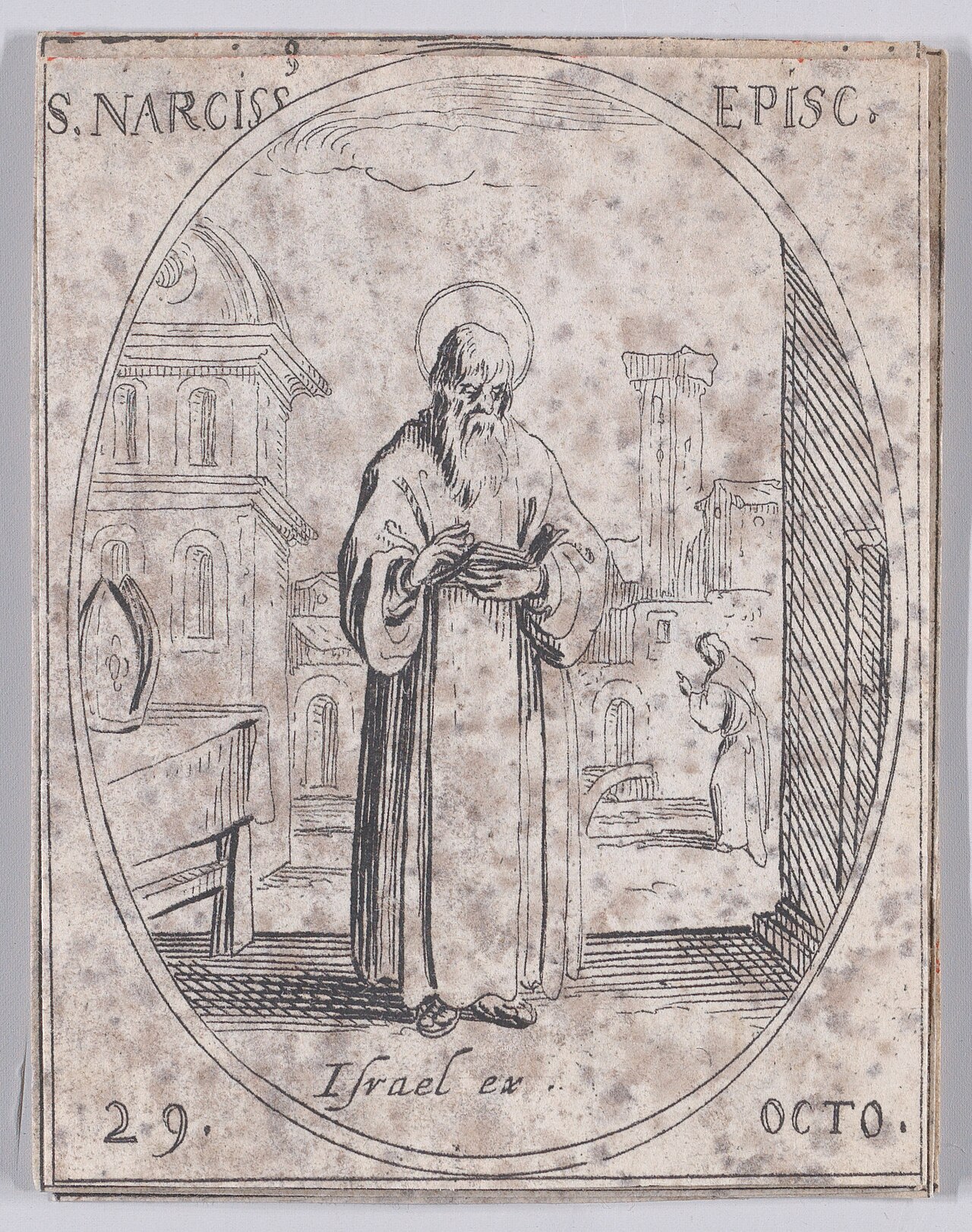
    Image: Jacques Callot, St. Narcissus, Bishop, from Les Images de tous les saints, published 1636. Metropolitan Museum of Art. Public domain (Met Open Access, CC0), via Wikimedia Commons. (source)

    Feria (saint from the Roman Martyrology) · Liturgical colour: Green

    This site follows the traditional Roman calendar of 1962, as found in the 1962 Roman Missal used at the Traditional Latin Mass. Some feast days fall on different dates than in the General Roman Calendar of 1969, revised after the Second Vatican Council.

    In patientia vestra possidebitis animas vestras.
    In your patience you shall possess your souls.

    Luke 21:19

    A Feria

    In the traditional 1962 calendar, October 29 is a feria: no saint’s feast is kept at Mass today, and the Mass is of the preceding Sunday. So that every day has its saint, today’s entry comes from the traditional Roman Martyrology, which reads: “At Jerusalem, the birthday of blessed Narcissus, a bishop distinguished for holiness, patience and faith, who went to the kingdom of God at the age of one hundred and sixteen years.”

    His Life

    Narcissus was already an old man when he became bishop of Jerusalem near the end of the second century. Most of what we know of him comes from the historian Eusebius, who heard the memories the Christians of Jerusalem still kept of their holy shepherd.

    They remembered a miracle from one Easter Vigil, when the deacons ran out of oil for the church lamps. Narcissus told them to draw water from a nearby well and bring it to him. He prayed over it with faith, and when it was poured into the lamps it burned as oil. Eusebius says a little of that oil was still kept in his own day as a memorial.

    Holiness did not spare him from enemies. Three men who feared his strictness accused him of a grave crime and swore to it with dreadful oaths, each calling down a curse on himself if he lied. Narcissus did not defend himself with bitterness. He quietly withdrew into the desert and lived there for years in prayer and solitude. In time each of the accusers met the very misfortune he had called down, and the last of them confessed the lie publicly with tears.

    When Narcissus came back, the people joyfully welcomed him as their bishop again. Around this time he also took part with other bishops of Palestine in a council on the date of Easter. In his extreme old age, the bishop Alexander came to Jerusalem and, by a sign the faithful took to be from God, was chosen to share the burden of governing the Church at his side. Alexander later wrote that Narcissus, at the age of 116, was still urging the faithful by his prayers to live in peace and unity. He died soon after, rich in years and in patience.

    Collect

    Latin

    Da, quǽsumus, omnípotens Deus: ut beáti Narcíssi Confessóris tui atque Pontíficis veneránda solémnitas, et devotiónem nobis áugeat et salútem. Per Dominum nostrum Jesum Christum, Filium tuum, qui tecum vivit et regnat in unitate Spiritus Sancti, Deus, per omnia sæcula sæculorum. Amen.

    English

    Grant, we beseech Thee, almighty God, that the venerable feast of blessed Narcissus, Thy Confessor and Bishop, may increase in us both devotion and salvation. Through our Lord Jesus Christ, Thy Son, who liveth and reigneth with Thee in the unity of the Holy Ghost, God, world without end. Amen.


    Sancte Narcisse, ora pro nobis.
    St. Narcissus, pray for us.

  • October 28 – Sts. Simon and Jude, Apostles

    October 28 – Sts. Simon and Jude, Apostles

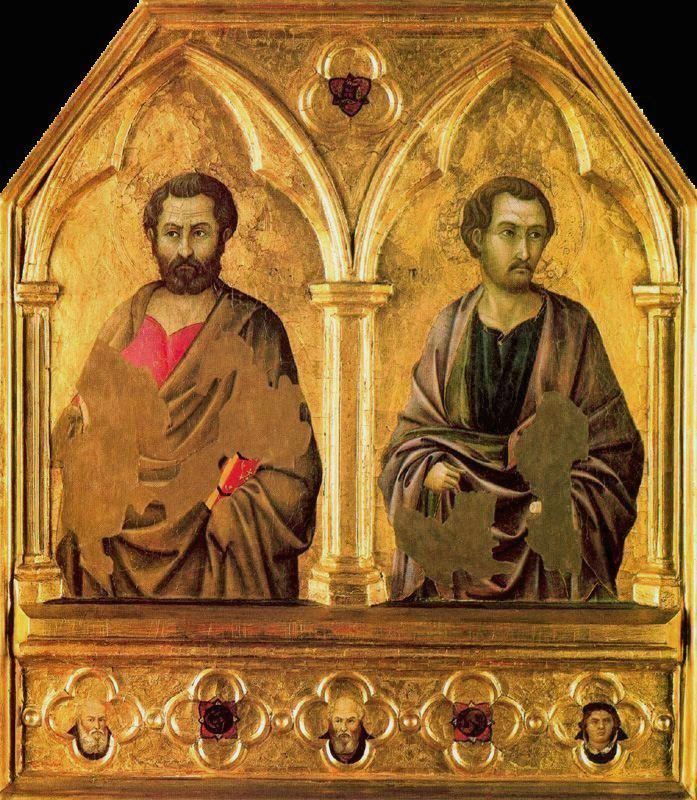
    Image: Ugolino di Nerio, St. Simon and St. Thaddeus (Jude), panel from the Santa Croce altarpiece, 1324–25. National Gallery, London. Public domain, via Wikimedia Commons. (source)

    II Class · Liturgical colour: Red

    This site follows the traditional Roman calendar of 1962, as found in the 1962 Roman Missal used at the Traditional Latin Mass. Some feast days fall on different dates than in the General Roman Calendar of 1969, revised after the Second Vatican Council.

    Deprecor vos supercertari semel traditæ sanctis fidei.
    I beseech you to contend earnestly for the faith once delivered to the saints.

    Jude 1:3

    Two Apostles, One Feast

    On October 28 the Church honors together two of the twelve Apostles chosen by our Lord. They appear side by side in the Gospel lists of the Twelve, and an old tradition holds that they also finished their course side by side, preaching and dying for Christ in the same land. For that reason the Roman calendar has long kept their feast on a single day.

    St. Simon

    St. Simon is called “the Zealot” by St. Luke and “the Cananean” by St. Matthew and St. Mark, names which most likely point to his fiery devotion to the Law before he was called to follow Jesus. The Gospels tell us little else about him, but that ardor, once given to Christ, became the zeal of an apostle.

    St. Jude

    St. Jude, also called Thaddeus, is the brother of St. James the Less and a kinsman of the Lord. At the Last Supper he asked our Lord why He would show Himself to the disciples and not to the world, and received the beautiful answer: “If any one love me, he will keep my word, and my Father will love him, and we will come to him, and will make our abode with him” (John 14:23). He wrote the short Epistle of Jude in the New Testament, which urges the faithful to hold fast to the Faith handed down from the Apostles. In later centuries he became widely loved as the patron of desperate and seemingly hopeless causes.

    Their Mission and Martyrdom

    After Pentecost the two Apostles carried the Gospel beyond the borders of the Roman world. The traditional Roman Martyrology records that Simon preached in Egypt and Jude in Mesopotamia, and that they then went together into Persia. There, having brought many to the Faith, they won the crown of martyrdom. Their relics are venerated in St. Peter’s Basilica in Rome. The red vestments of today’s Mass honor the blood they shed for Christ.

    Collect

    Latin

    Deus, qui nos per beátos Apóstolos tuos Simónem et Judam ad agnitiónem tui nóminis veníre tribuísti: da nobis eórum glóriam sempitérnam et proficiéndo celebráre, et celebrándo profícere. Per Dominum nostrum Jesum Christum, Filium tuum, qui tecum vivit et regnat in unitate Spiritus Sancti, Deus, per omnia sæcula sæculorum. Amen.

    English

    O God, who through Thy blessed Apostles Simon and Jude hast granted us to come to the knowledge of Thy name: grant that we may celebrate their everlasting glory by advancing in virtue, and advance in virtue by celebrating it. Through our Lord Jesus Christ, Thy Son, who liveth and reigneth with Thee in the unity of the Holy Ghost, God, world without end. Amen.


    Sancti Simon et Juda, orate pro nobis.
    Sts. Simon and Jude, pray for us.

  • October 27 – St. Frumentius, Bishop

    October 27 – St. Frumentius, Bishop

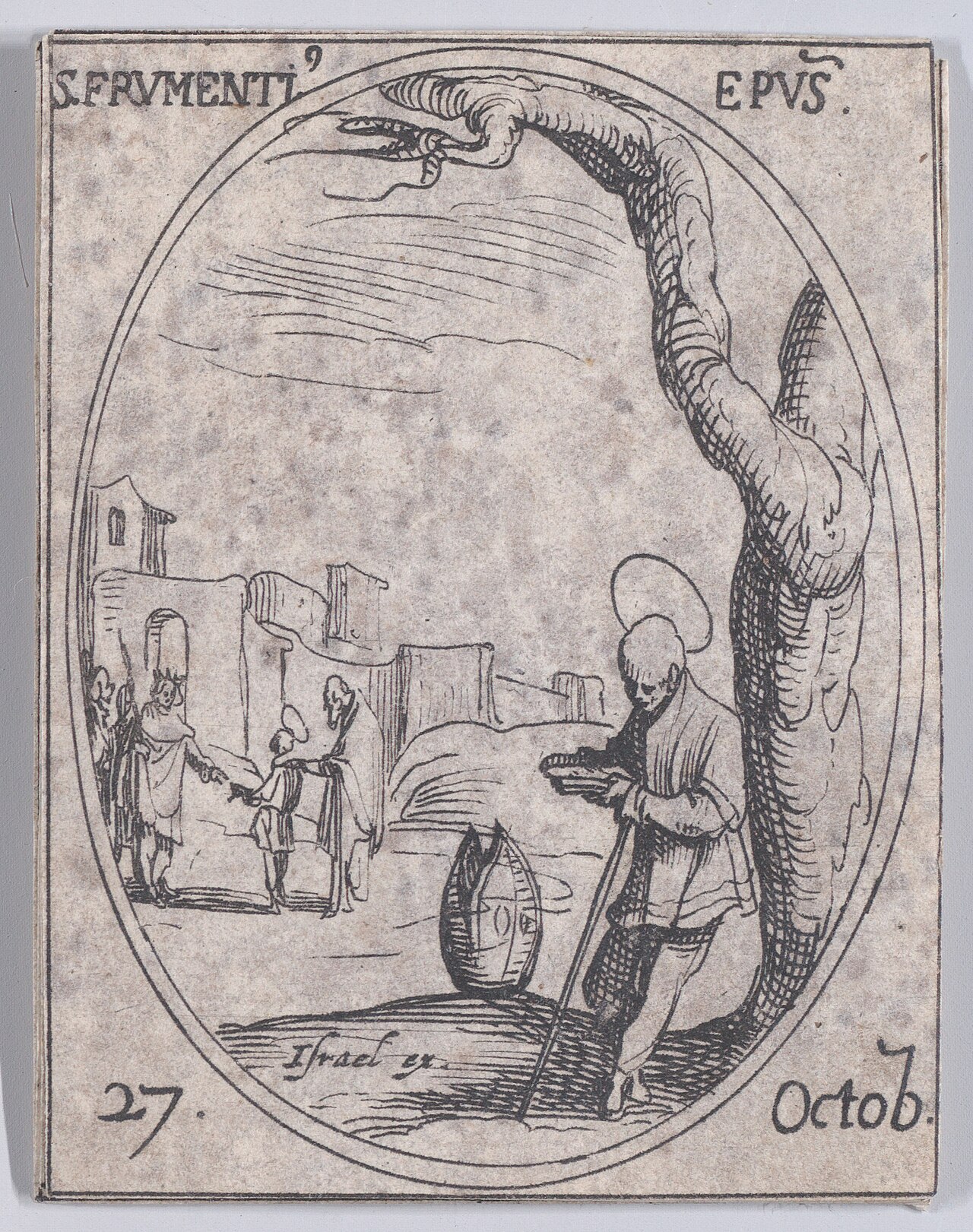
    Image: Jacques Callot, St. Frumentius, Bishop, from Les Images de tous les saints, published 1636. Metropolitan Museum of Art. Public domain (Met Open Access, CC0), via Wikimedia Commons. (source)

    Feria (saint from the Roman Martyrology) · Liturgical colour: Green

    This site follows the traditional Roman calendar of 1962, as found in the 1962 Roman Missal used at the Traditional Latin Mass. Some feast days fall on different dates than in the General Roman Calendar of 1969, revised after the Second Vatican Council.

    Quam speciosi pedes evangelizantium pacem, evangelizantium bona!
    How beautiful are the feet of them that preach the gospel of peace, of them that bring glad tidings of good things!

    Romans 10:15

    A Feria

    In the traditional 1962 calendar, October 27 is a feria: no saint’s feast is kept at Mass today (the old Vigil of Sts. Simon and Jude was dropped in the 1960 reform), and the Mass is that of the preceding Sunday. So that every day has its saint, today’s entry comes from the traditional Roman Martyrology, which reads: “In India, St. Frumentius, bishop. While he was a captive there he was consecrated bishop by St. Athanasius, and preached the Gospel in that country.” The “India” of the old writers here means the kingdom of Aksum, in what is now Ethiopia.

    His Life

    Frumentius was a Christian boy from Tyre, in Phoenicia, in the early fourth century. With his brother Aedesius he sailed on the Red Sea in the company of their teacher, the philosopher Meropius. When their ship put in at an African port, the local people killed the crew and passengers, sparing only the two boys, who were taken as captives to the king of Aksum.

    The brothers won the king’s trust. Aedesius became his cupbearer and Frumentius, the wiser of the two, his secretary and keeper of records. When the king died, the widowed queen begged them to stay and help govern until her young son, Ezana, came of age. Frumentius used his place at court to seek out Christian merchants from Roman lands, gave them freedom to worship, helped them build places of prayer, and quietly spread the Faith among the people.

    When the prince was grown, the brothers were set free. Aedesius returned to Tyre, but Frumentius went to Alexandria and asked the great St. Athanasius to send a bishop to the land he had come to love. Athanasius answered that no one was better fitted than Frumentius himself, and consecrated him bishop around the year 340. He went back to Aksum, baptized many, and by tradition King Ezana himself embraced Christianity. The Ethiopian Church still honors him as Abuna Salama, “Father of Peace,” and as the one who first brought them the light of the Gospel.

    Collect

    Latin

    Da, quǽsumus, omnípotens Deus: ut beáti Fruméntii Confessóris tui atque Pontíficis veneránda solémnitas, et devotiónem nobis áugeat et salútem. Per Dominum nostrum Jesum Christum, Filium tuum, qui tecum vivit et regnat in unitate Spiritus Sancti, Deus, per omnia sæcula sæculorum. Amen.

    English

    Grant, we beseech Thee, almighty God, that the venerable feast of blessed Frumentius, Thy Confessor and Bishop, may increase in us both devotion and salvation. Through our Lord Jesus Christ, Thy Son, who liveth and reigneth with Thee in the unity of the Holy Ghost, God, world without end. Amen.


    Sancte Frumenti, ora pro nobis.
    St. Frumentius, pray for us.